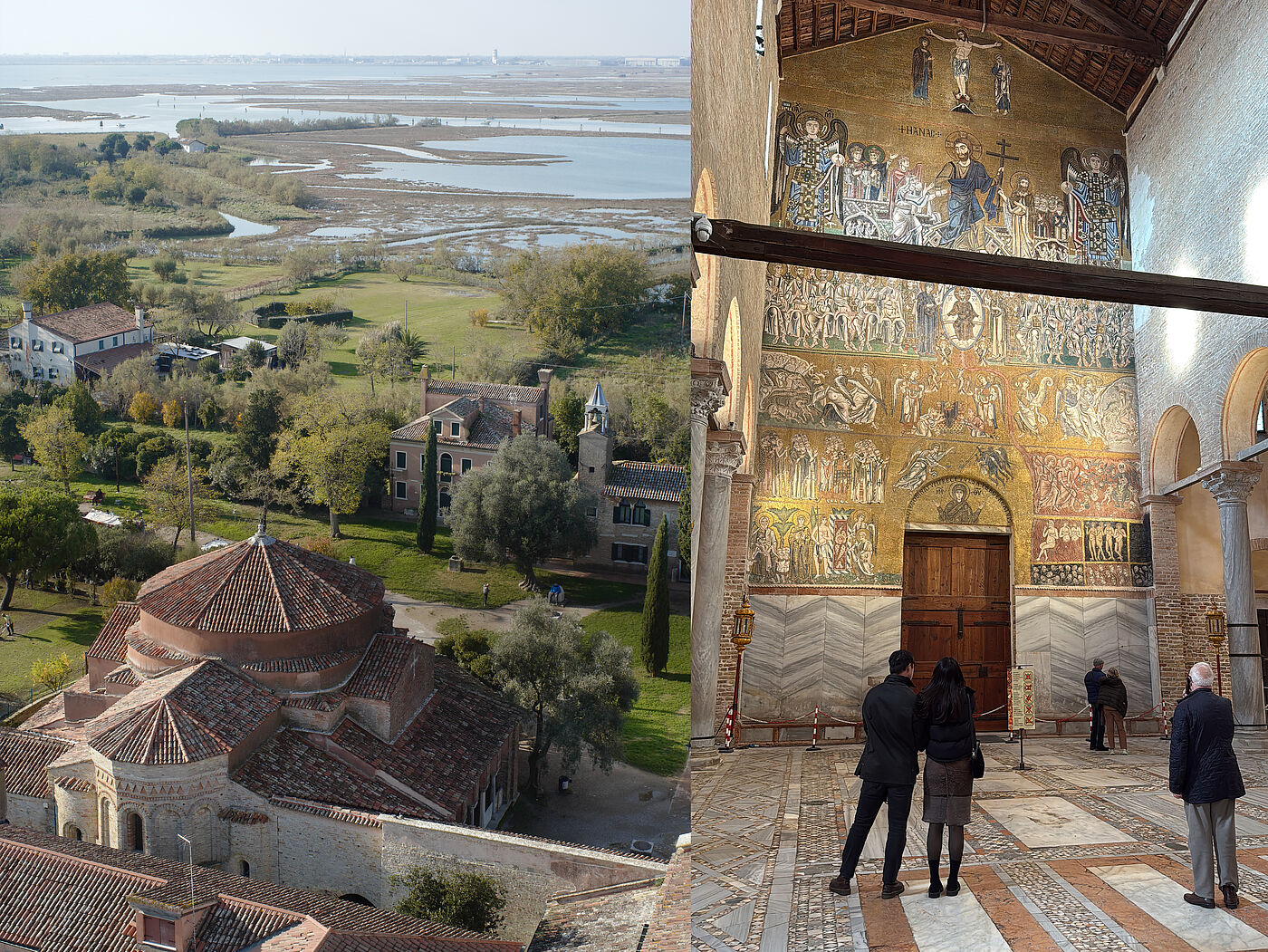
Unter der Leitung von Prof. Matthias Ludwig, Prof. Philipp Loeper und Prof. Henning Schellhorn führte die Exkursion nicht nur zur Biennale, sondern auch zur Partnerhochschule UIAV, dem "Istituto Universitario di Architettura di Venezia" und weiteren Ausstellungen in der Stadt. Die Geschichte Venedigs war erfahrbar mit der Insel Torcello, der ältesten Siedlung in der venezianischen Lagune, dem Glashandwerk auf Murano, und dem Gheto Novo.
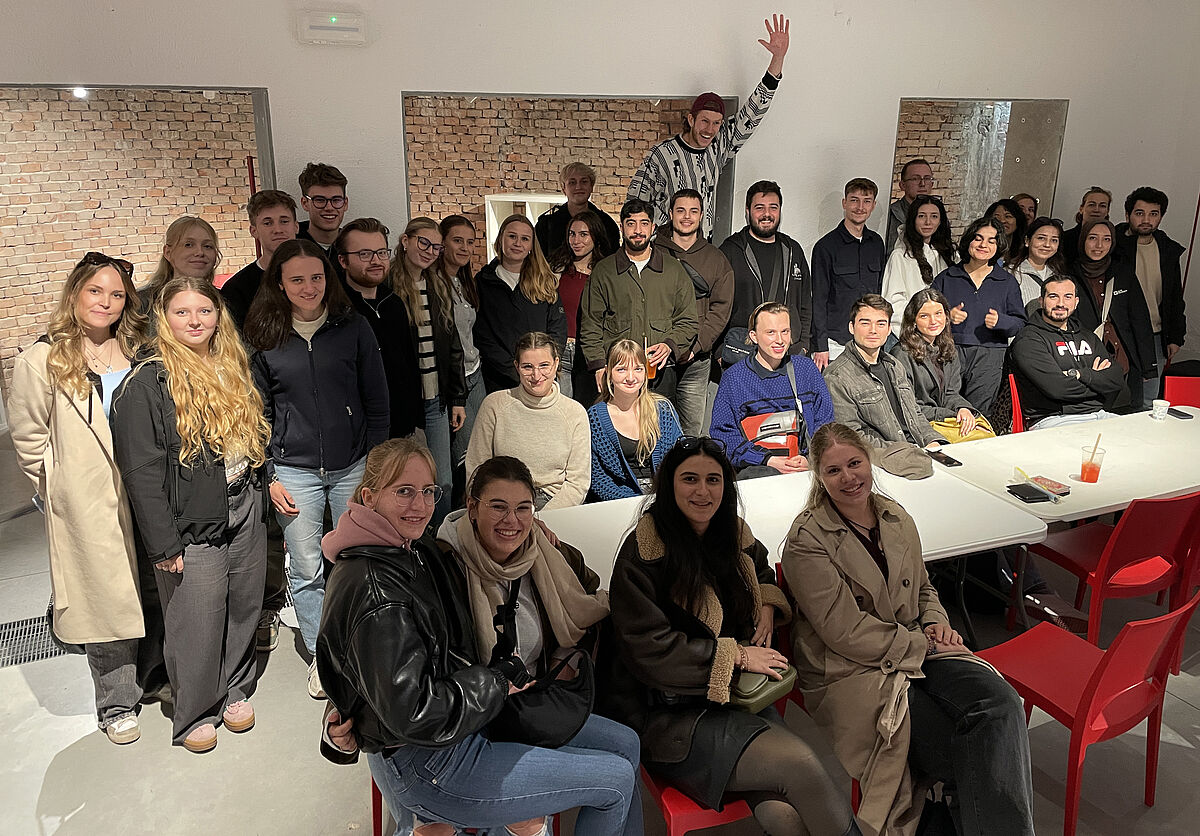
Darüber hinaus stellte die Biennale von Venedig der Hochschule Wismar im Rahmen der „Sessions“ einen Seminarraum zur Verfügung, der die Möglichkeit gab die Ausstellung zu reflektieren. Charlott Serwatka, Studentin der Architektur (MA) und Matthew Keller aus Vancouver, British Columbia, Canada, internationaler Student der Architektur (MA), reagieren im Interview mit Ihren Wahrnehmungen und Erkenntnissen.
Die neunzehnte Architektur Biennale 2025 stand unter dem Motto „Intelligens. Natural. Artificial. Collective“. Was gefiel Ihnen besonders an diesem Gesamtkonzept? – The 19th International Architecture Exhibition was themed „Intelligens. Natural. Artificial. Collective”. What did you particularly like about this overall concept?
⇢ Matthew Keller: I found the topics particularly compelling as they focused on a hybridization of technical ability in our current age along with the natural world, our own lived experiences, and local vernacular/knowledge. This dialogue between the often separate and removed aspects of technology in relation to how it affects humans was unique and I felt added a touch of humanity that the current push for technological integration is currently missing.
⇢ Charlott Serwatka: Mir gefiel wie der Begriff „Intelligens“ verstanden wurde. Statt eine eindeutige Definition vorzugeben, hat die Biennale gezeigt, dass Intelligenz in vielen Formen existiert – in ökologischen Systemen, in technischer Innovation, aber auch in kulturellen und sozialen Praktiken – worauf ja auch die letzte Silbe des Titels hinweist: „gens“ lateinisch für „Volk“. Gerade die Verflechtung von natürlicher und künstlicher Intelligenz fand ich spannend - die Ausstellungen machten deutlich, dass diese beiden Bereiche nicht unbedingt gegeneinander stehen, sondern sich gegenseitig beeinflussen und ergänzen können. Dadurch entstand ein sehr zeitgemäßer, aber auch kritischer Blick darauf, wie wir in Zukunft gestalten können.
Was fanden Sie von den zahlreichen Länderpavillons und von der durch Carlo Ratti kuratierten zentralen Ausstellung im Arsenale sowie in den Palazzi am interessantesten? – What did you find most interesting about the numerous national pavilions, the central exhibition in the Arsenale curated by Carlo Ratti and the Palazzi?
⇢ Matthew Keller: Unique to an exhibition like this was not only the sheer scale of the venues and breadth of work, but simply to be able to appreciate the varied approaches to the topic proposed by Carlo Ratti. It allowed for a brief snapshot into the experiences, expertise, and challenges each country was working with, and how they were approaching the future. Some countries presented displays with a degree of uncertainty for the future, as some had an increasingly high likelihood to be disproportionately affected by climate change in the coming years. Others felt that more technical solutions were required, while others focused on local vernacular and passive solutions that their ancestors had been using for many years prior.
⇢ Charlott Serwatka: An den Länderpavillons hat mich vor allem die vielfältige Umsetzung der Themen fasziniert. Jede Nation brachte eigene Perspektiven, kulturelle Hintergründe und gestalterische Schwerpunkte ein, sodass sich ein sehr abwechslungsreiches und vielschichtiges Bild ergab. Besonders im Nachgang sticht für mich der Schweizer Pavillon hervor (der die Frage aufwirft, wenn 1952 nicht Bruno Giacometti, sondern eine zeitgenössische Kollegin, die Zürcher Architektin Lisbeth Sachs den Giardini Pavillon geplant hätte). Er beeindruckte durch eine ruhige, reduzierte Gestaltung. Die Leichtigkeit der Vorhang-Elemente führten die Besucher*innen sanft durch den Raum, der sich inhaltlich mit der Rolle von Architektinnen in der Geschichte auseinandersetzte und traditionelle Geschlechterrollen im Bauwesen hinterfragte.
Die Arsenale war schon allein durch den Ort selbst ein Erlebnis! Seit dem 12. Jahrhundert diente der Komplex als Schiffswerft der venezianischen Republik und in Teilen bis heute dem Militär. Die riesigen Hallen mit hohen Decken und historischen Säulen und Backsteinwänden waren dicht bespielt, mit zahlreichen sich überlagernden Installationen und Projektionen. Die schiere Menge aber führte auch zu leichter Reizüberflutung. Ich hätte wohl die gesamten Tage dort verbringen können ohne alles wahrgenommen zu haben.
Alle Ausstellungskonzepte formulierten auf unterschiedlichste Weise Themen die Themen der Biennale, welches fanden Sie am eindrücklichsten umgesetzt? – All the exhibition concepts addressed the themes of the Biennale in different ways. Which one did you find the most impressively realized?
⇢ Matthew Keller: One of the strongest pavilions in execution of their idea was for me the Swiss Pavilion. Entitled “Endgültige Form wird von der Architektin am Bau bestimmt”, invited a vision of what could have been instead of the current pavilion design. As communicated by the pavilion, while the country espouses equal values for all, it is nonetheless evident that no current base pavilions in the Giardini site are designed by women. Therefore, the pavilion rebuilt a skeleton version of what the temporary pavilion by Lisbeth Sachs looked like for the Kunsthalle in the Giardini for the 1958 Swiss Exhibition for Women’s Work (SAFFA) in Zurich. The shape was relatively simple, with light straight walls splayed around a few low-slope conical roofs, but the intersection of the primarily right-angled existing building of plaster, steel, concrete and brick with this structure, both realized in full scale made for a captivating dialogue between what was and what is, and what could have been.
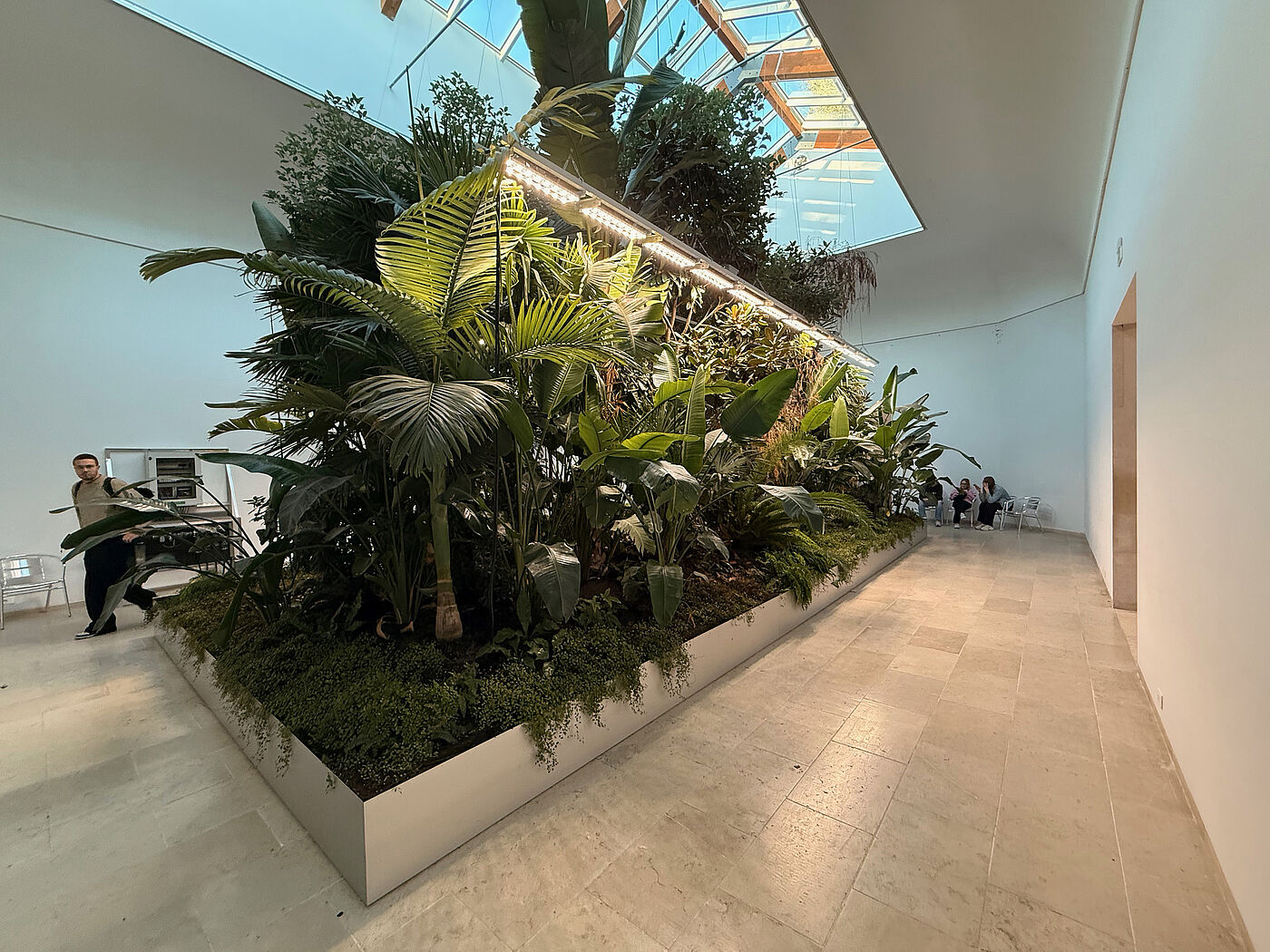
⇢ Charlott Serwatka: Die Konzepte, die es geschafft haben, die Verbindung von inhaltlicher Tiefe und räumlicher Erfahrung gleichzeitig spürbar zu machen. Für mich stachen dabei vor allem Ausstellungen hervor, die komplexe Themen greifbar und unmittelbar erfahrbar machten – sei es durch subtile architektonische Eingriffe, interaktive Installationen oder innovative Inszenierungen wie der belgische Pavillon. Dieser beschäftigte sich mit der Frage, wie Ökosysteme als intelligente Netzwerke funktionieren, also wie Pflanzen, Mikroorganismen, Klimaeinflüsse und technologische Sensorik miteinander interagieren. Statt dies rein theoretisch zu vermitteln, wurde der Raum in eine Art begehbare Klima- und Vegetationsinstallation verwandelt. Durch unterschiedliche Feuchtigkeitszonen, Lichtstimmungen und Pflanzenformationen konnte man körperlich erleben, wie sensibel solche Ökosysteme aufgebaut sind und wie sie auf Störungen oder Veränderungen reagieren. Man bewegte sich durch ein lebendiges System, das als Ganzes funktionierte. Gleichzeitig wurden digitale Elemente und Messdaten integriert, sodass die Verbindung von natürlicher und technologischer Intelligenz auf eine sehr ruhige, aber eindrückliche Art sichtbar wurde. Auch wenn der Pavillon kein vollständig funktionierendes, autonomes Ökosystem abbildete, fand ich den Ansatz überzeugend. Er hat in dem Rahmen, den eine Ausstellung bieten kann gut funktioniert, finde ich. Die Idee wurde räumlich erfahrbar, die Atmosphäre war eindrucksvoll, und die Verbindung von Natur und Technologie wurde auf verständliche und anschauliche Weise vermittelt.
Welche der thematisierten lokalen oder globalen Probleme sind für Sie am dringlichsten zu lösen? – Which of the discussed local or global issues do you consider the most urgent to solve?
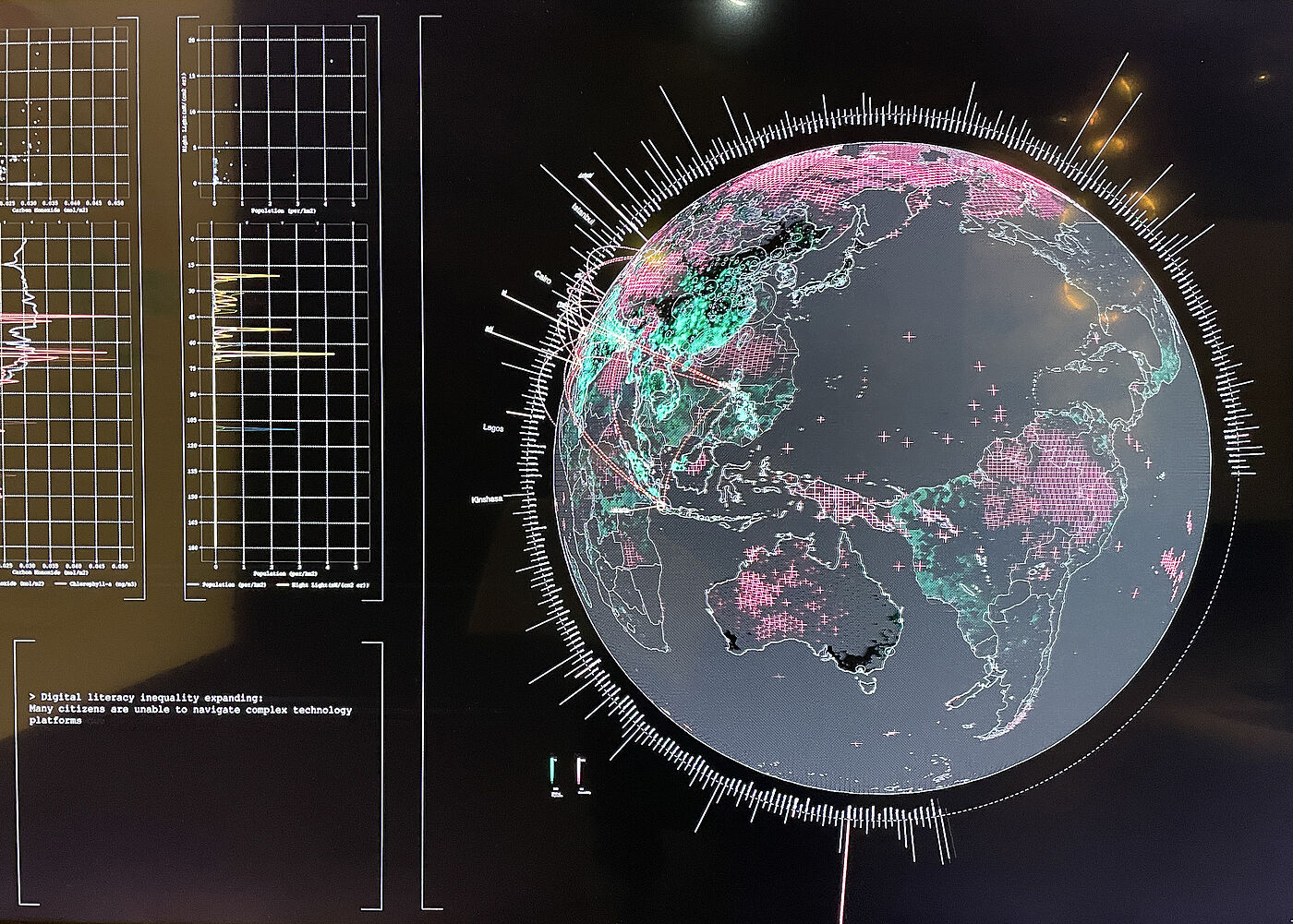
⇢ Matthew Keller: In the Arsenale, the exhibitions on the ideas of security and technology in methods of power exploitation and control I found to be a really important point of discussion. One of the graphics entitled “Calculating Empires: A genealogy of Technology and Power Since 1500” showed various technological and societal advances that shaped the influence of power from various groups over the course of history. As technology evolves especially into the new age of artificial intelligence, it feels like the gap between those who have access to this technology versus those who do not is becoming ever larger; therefore, it is more prevalent even now to figure out to decrease this gap to avoid exploitation towards other groups.
⇢ Charlott Serwatka: Die Probleme, die direkt unsere Lebensräume und Lebensqualität beeinflussen: der Klimawandel, Ressourcenknappheit und die zunehmende Belastung urbaner Räume. Damit meine ich vor allem Themen wie Überhitzung in Städten, fehlende Grün- und Aufenthaltsflächen, Versiegelung, soziale Ungleichheiten im Zugang zu Wohnraum und die immer komplexeren Anforderungen an nachhaltige Mobilität. All diese Faktoren wirken sich unmittelbar darauf aus, wie wir in Zukunft leben können, und Architektur und Stadtplanung spielen dabei eine entscheidende Rolle.
Welcher Ausstellungsbeitrag, auch in den Außenstellen, hat Sie persönlich am stärksten inspiriert? – Which exhibition contribution, including those in the participating locations, inspired you the most?
⇢ Matthew Keller: I think of the Kosovo pavilion, as they took a distinctive approach to the suggested prompt. Curated by Erzë Dinarama, Emerging Assemblages used the ephemeral nature of smells / scents to provoke feelings of uncertainty and help tell the story of fieldwork with Kosovo farmers. Suspended from a circle, each scent was released on a brief interval that emulated various scents around the agricultural calendar, including frost, the first summer rain, morning dew, summer harvest, and fall decay. Commonly known, the sense of smell is closely associated with the brain’s emotional and memory centers and therefore captivated me with associated memories of when I was much younger on my grandparent’s farm. The pavilion talked about the shifting climate, where crop growing / planting windows are starting much earlier in the year, and extreme weather conditions are damaging production and the farmer’s livelihoods. I thought back to my own lived experience with similar smells, and how these memories are also fading and the time that they took place in is no longer what it once was. It was inspiring to me to be able to incorporate such evanescent aspects into the display and helped me pause to think about what this could mean for architecture in our current context, and how it must shift with our age.
⇢ Charlott Serwatka: Ein starker Impuls für mich war “Heatwave”, der Länderpavillon des Königreichs Bahrain. Er thematisierte nicht nur ein global dringendes Problem – extreme Hitze und Klimawandel – sondern zeigte gleichzeitig, wie Architektur praktische Lösungen, ästhetische Gestaltung und gesellschaftliche Relevanz überzeugend miteinander verbinden kann. Besonders beeindruckend war, dass ein passives Kühlungssystem am eigenen Leib spürbar war – man konnte sofort erleben, wie der Raum angenehme Temperaturen erzeugt und so den Effekt der Architektur unmittelbar nachvollziehbar machte.
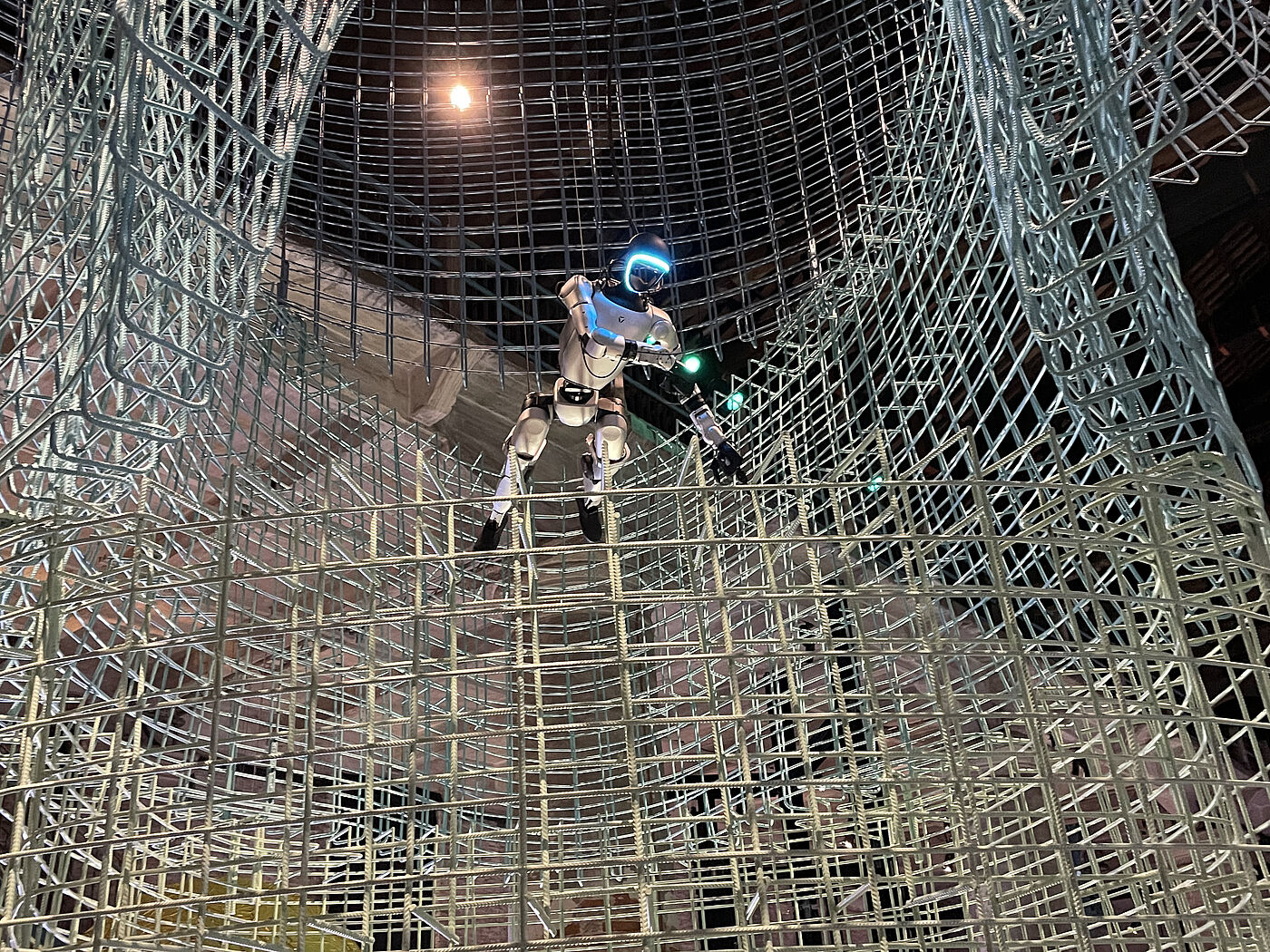
Viele andere Ausstellungsbeiträge griffen ebenfalls aktuelle Probleme auf, präsentierten sich oft sehr theoretisch oder wirkten dystopisch. Beim Betreten der Arsenale wirkte alles ziemlich düster, fast so, als würde man direkt in eine apokalyptische Zukunft eintreten. Die inhaltliche Gewichtung, die Mischung aus Maschinen, Robotik und Natur erzeugte eine spürbare Spannung. Die Installation „A Robot’s Dream“ beispielsweise, zeigte wie Robotertechnologien, digitale Verfahren und künstliche Intelligenz in unsere gebaute Umwelt integriert, wie High-Tech-Elemente mit ökologischen und klimatischen Szenarien kombiniert werden können. Faszinierend, aber gleichzeitig erschlagend, weil mich die Installation emotional forderte. „Heatwave“ hingegen überzeugte mich, weil die Idee real, greifbar und erfahrbar war und gleichzeitig konstruktive, positive Lösungsansätze vermittelte. Die Verbindung von Innovation, Funktionalität und sinnlicher Erfahrung hat mich nachhaltig inspiriert.
Was hoffen Sie in Ihren Interessensgebieten in Zukunft zu erleben? – What do you hope to experience in your fields of interest in the future?
⇢ Matthew Keller: I appreciated that the Biennale exhibitors took challenges head on and did not shy away from issues that face us today, whether having to do with climate, material scarcity, changing technology, or economic challenges. In this sense, I hope that in my future practice in the architectural field I can also approach these challenges with frankness, practicality, and ambition.
⇢ Charlott Serwatka: Für meine Zukunft wünsche ich mir Architekturprojekte, die gesellschaftliche und ökologische Herausforderungen aufgreifen, dabei ästhetisch, räumlich und funktional überzeugend sind und innovative Materialien, nachhaltige Technologien und partizipative Ansätze verbinden. Besonders spannend finde ich Projekte, die neue Formen des Zusammenlebens und Arbeitens im urbanen Raum ermöglichen und Räume schaffen, in denen Mensch, Natur und Technologie in Balance stehen. Ich wünsche mir Architektur, die innovativ, nachhaltig, sozial relevant und sinnlich erfahrbar ist und neue Perspektiven auf unser Leben und unsere gebaute Umwelt eröffnet.
Neben der Biennale gab es noch weitere Ausstellungen zu besuchen. Welche haben Sie gesehen und was hat Sie an diesen fasziniert? In addition to the Biennale, there were other exhibitions to visit. – Which ones did you attend, and what fascinated you about them?
⇢ Matthew Keller: Including but not limited to, I attended the exhibitions of “Diagrams” (by AMO/OMA), the space of the participating country Iceland (curated by Arnhildur Pálmadóttir), “Deep Surfaces” by UNESCO, “Parallel Worlds” from Macao (curated by Wang Shu & Lu Wenyu), and “A Hong Kong Archive” (curated by Fai Au, Sunnie S.Y. Lau, Ying Zhou). The icelandic exhibition was unique to me as it presented a vision of cities built out of lava/basalt, an untapped resource that could potentially be used to create new, large, monolithic structures. The visuals they used I thought stood out and created a really cool atmospheric vision of what could be. Another method they employed was to create stories that were told in future past tense, as though the lava cities had already been made and were now part of history. This also was for me successful as it helped me to imagine what it might be like to experience a civilization such as this.
⇢ Charlott Serwatka: Außerhalb der Biennale faszinierten mich insbesondere zwei Orte, beide gestaltet vom venezianischen Architekten Carlo Scarpa: das „Negozio Olivetti“, ein ehemaliges Ladengeschäft des Büromaschinenherstellers Olivetti von 1957/58 und die „Fondazione Querini Stampalia im Palazzo Querini“. Letztere wurde zwischen 1959 und 1963 von Scarpa umgestaltet - darunter der Eingang, die Brücke über den Kanal, die Innenräume und der Garten. Ich bewundere Carlo Scarpas Werke. Seine Materialwahl, jede Linie und jedes Detail sind perfekt durchdacht und proportioniert. Das Spiel von Licht, Schatten, Wasser und räumlichen Übergängen macht seine Architektur sehr besonders und zeitlos.
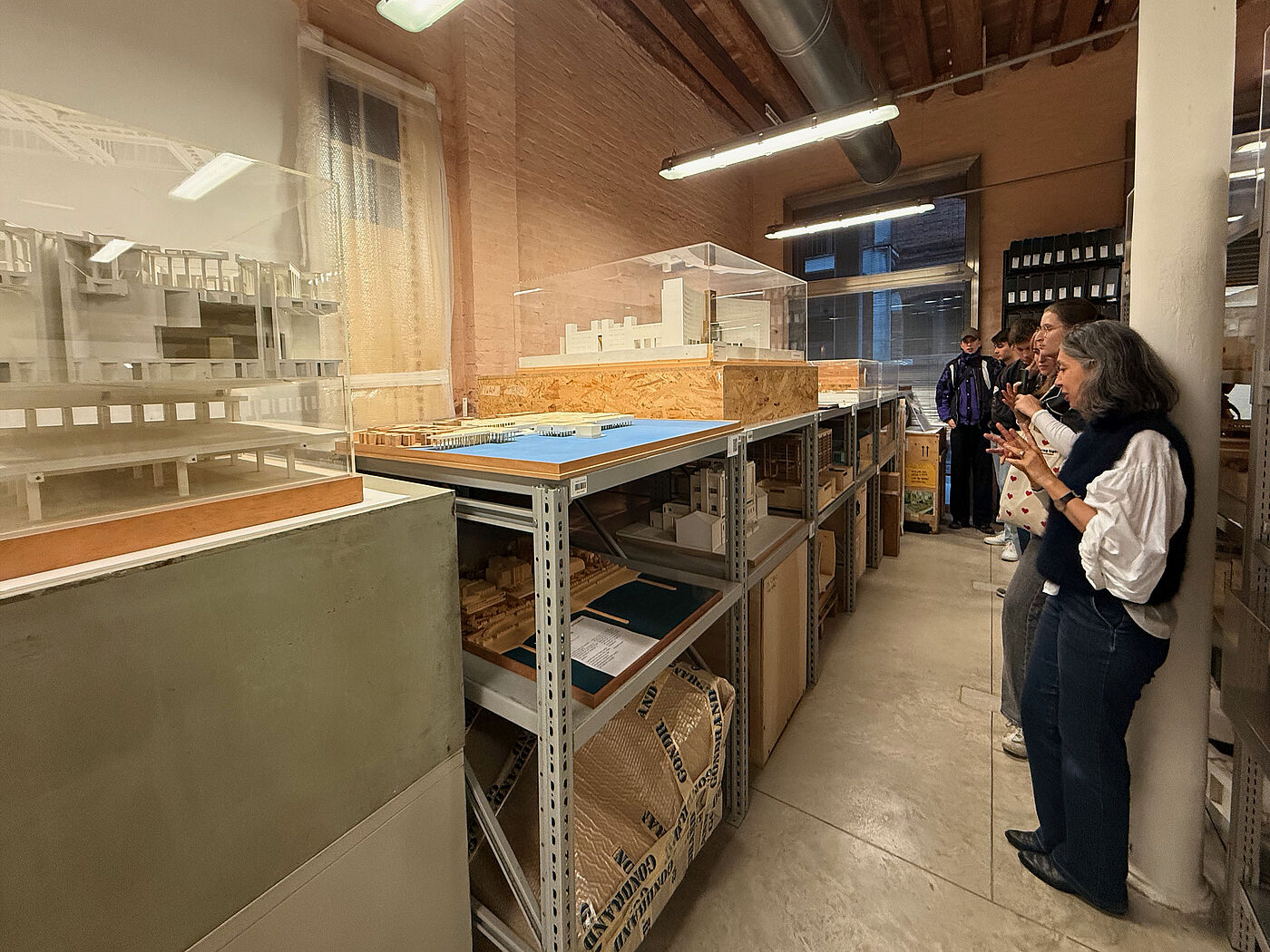
Der Besuch des "Istituto Universitario di Architettura di Venezia", hatte einen starken Fokus auf Kulturgüter. Welchen Eindruck konnten Sie mitnehmen? – The visit to the "Istituto Universitario di Architettura di Venezia", had a strong focus on cultural heritage. What impressions did you take for your life or profession?
⇢ Matthew Keller: Going into the architectural model archive was a special experience for me as I had never seen an archive of that scale for architectural models of such importance before. This in combination with seeing the drawing and photo archive reminded me of the importance of working in a physical manner, with sketches, drawings, and models to develop architectural work. As we increase our digital workflow in the profession, I was thankful to have a reminder of the importance of physical work, as architecture not only deals with the theoretical, but also with the tangible and substantive.
Venedig: das Gheto Novo, die Inseln, die Geschichte, das Handwerk – auf welches Thema würden Sie sich beim nächsten Besuch konzentrieren? – Venice: the Gheto Novo, the islands, the history, the craftsmanship — on which topic would you focus during your next visit?
⇢ Matthew Keller: I particularly enjoyed visiting the outer islands of Venice, and for a continued visit I would like to spend more time there.Not often noted by the average tourist, I found it fascinating how the landscape and inhabited zones have changed throughout the history of Venice, shifting from the surrounding islands to the Venice we now know. Visiting the island of Torcello was quite interesting, as it once was home to a much larger population and town, but now due to various factors is primarily only a church and a few restaurants. While climbing the bell tower of the church of Santa Maria Assunta, I couldn’t help but look over what is now mostly farmland and imagine the lives and city that were once there.
⇢ Charlott Serwatka: Beim nächsten Besuch würde ich mich auf das Gheto Novo, dem separates Wohngebiet für die jüdische Bevölkerung vom 16. bis zum 18. Jahrhundert, konzentrieren. Ich finde es spannend, die Geschichte dieses in sich geschlossenen historischen Viertels zu erkunden, seine Architektur, die engen Gassen und die Verbindung zwischen kulturellem Erbe und sozialer Entwicklung zu erforschen. Besonders interessiert mich, wie Architektur, städtische Struktur und Geschichte hier zusammenwirken und welche Spuren vergangener Gemeinschaften noch heute sichtbar sind.
Conclusion
⇢ Matthew Keller: This being my first time to Venice, I found that not only the city of itself warranted a visit, but the Biennale and its exhibitions were of importance to physically see also. Although I had read a bit about the Biennale in the past, being there and experiencing it was necessary to garner the inspiration and thought-provoking experience that it can provide. I would encourage other students if given the opportunity, to also go and visit.