Cultivation as Spatial
The proposal understands urban farming not as a technical device, but as an architectural and spatial theme.
Site as Infrastructure
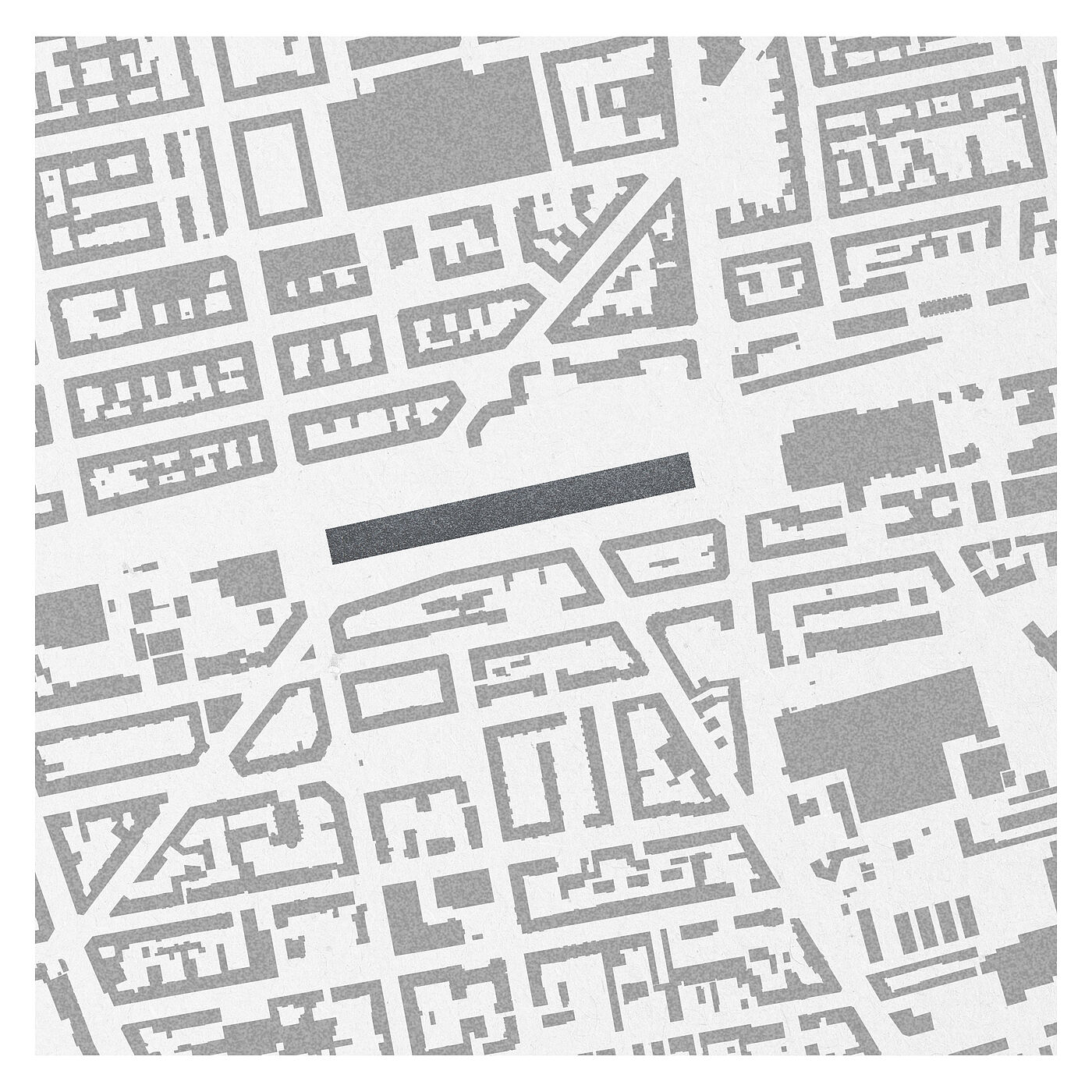
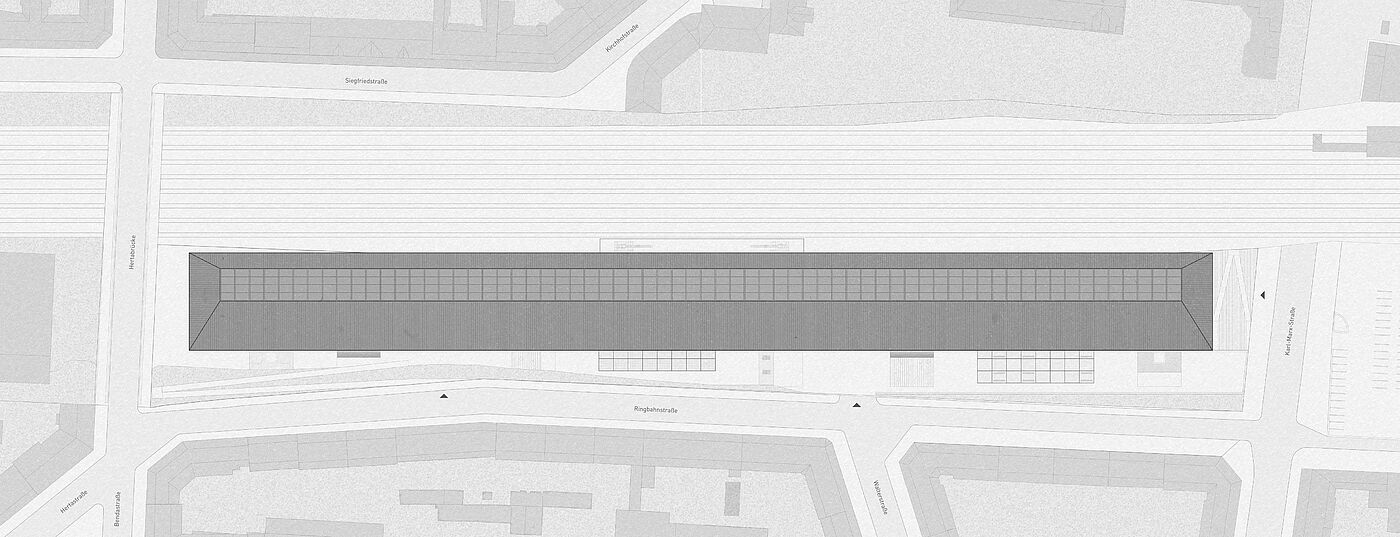
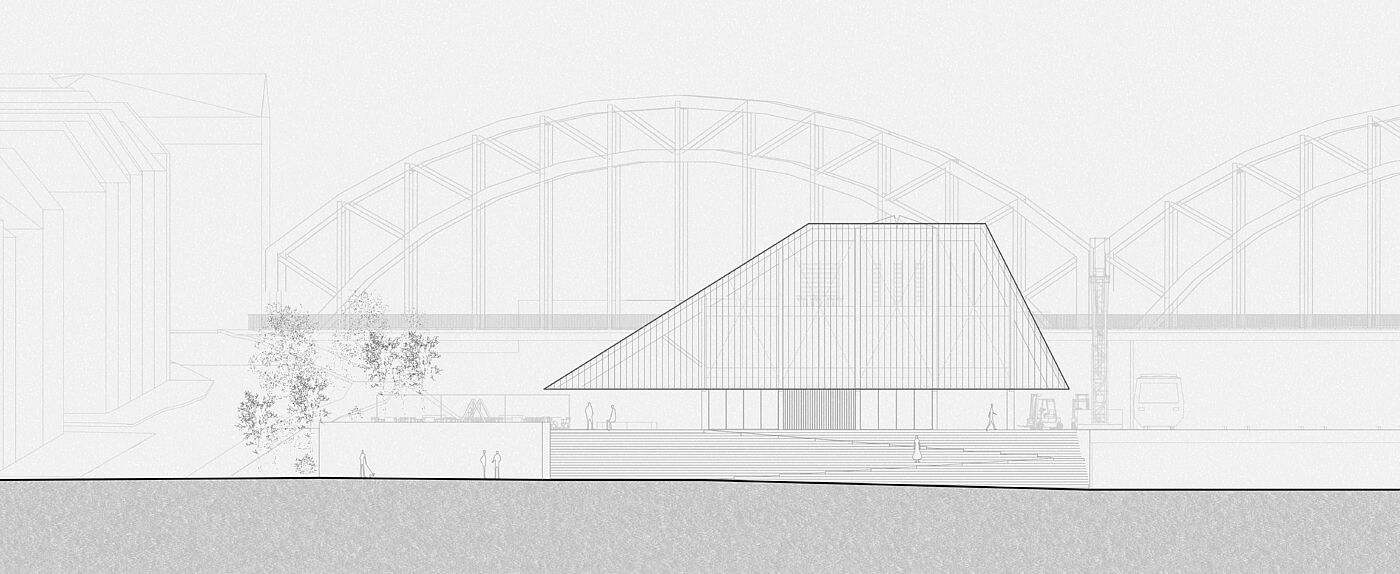
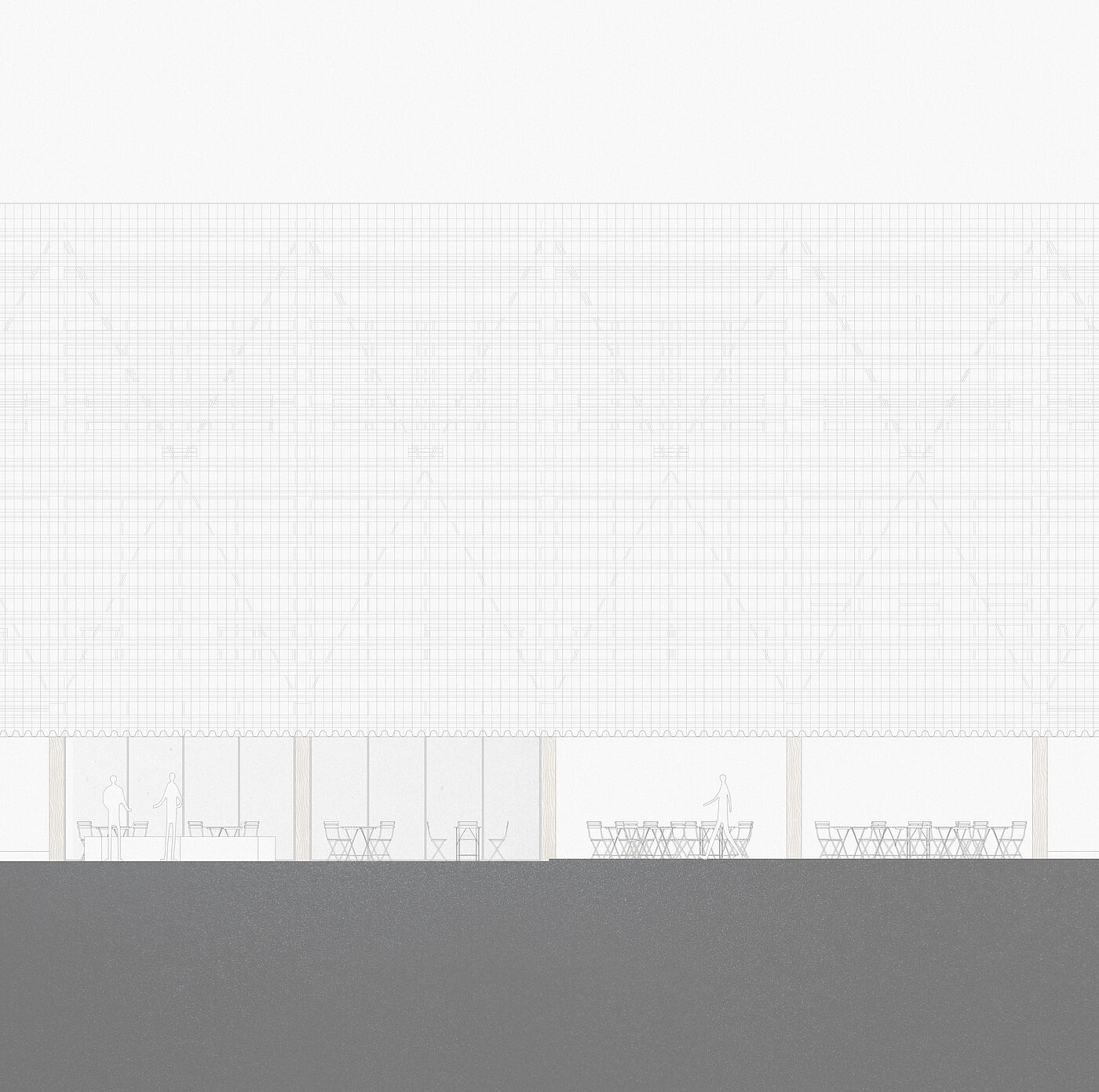
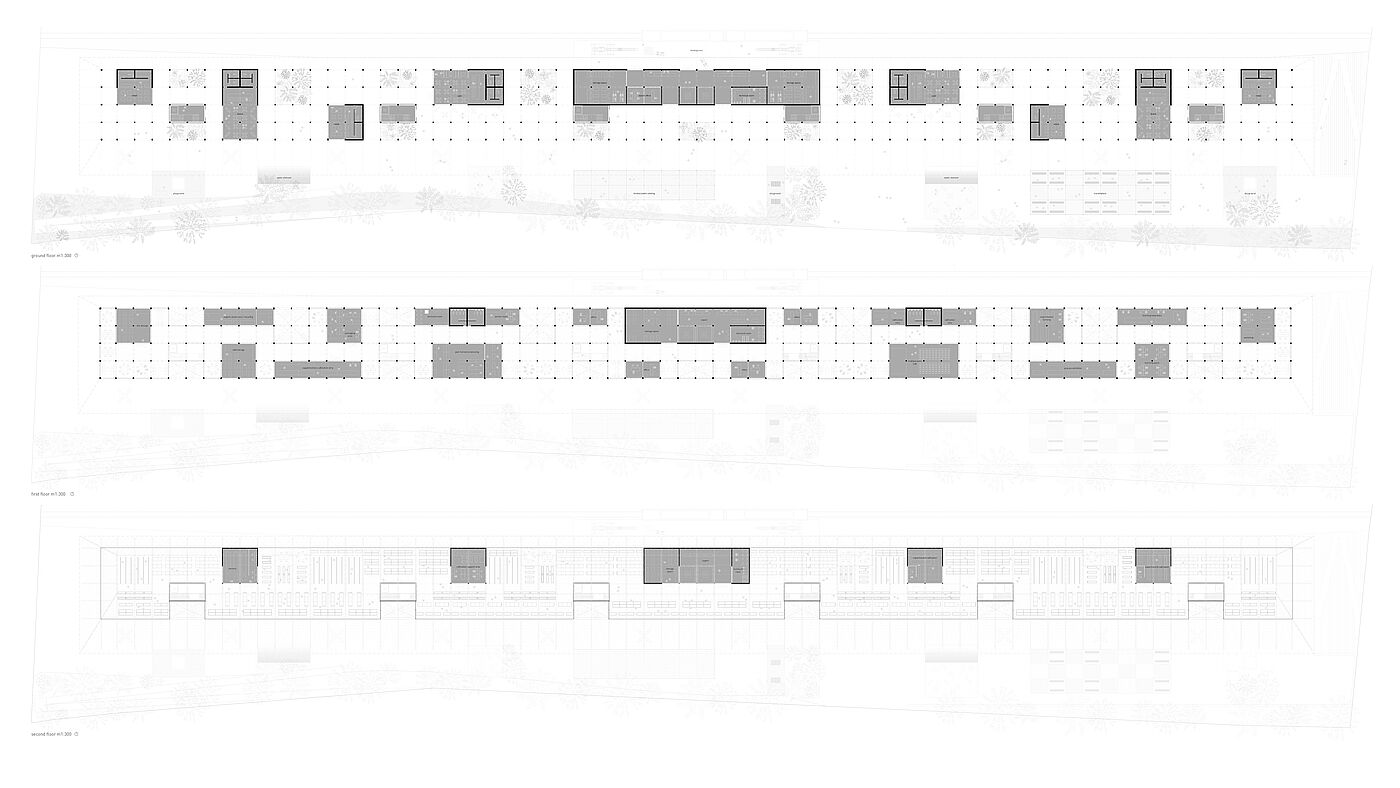
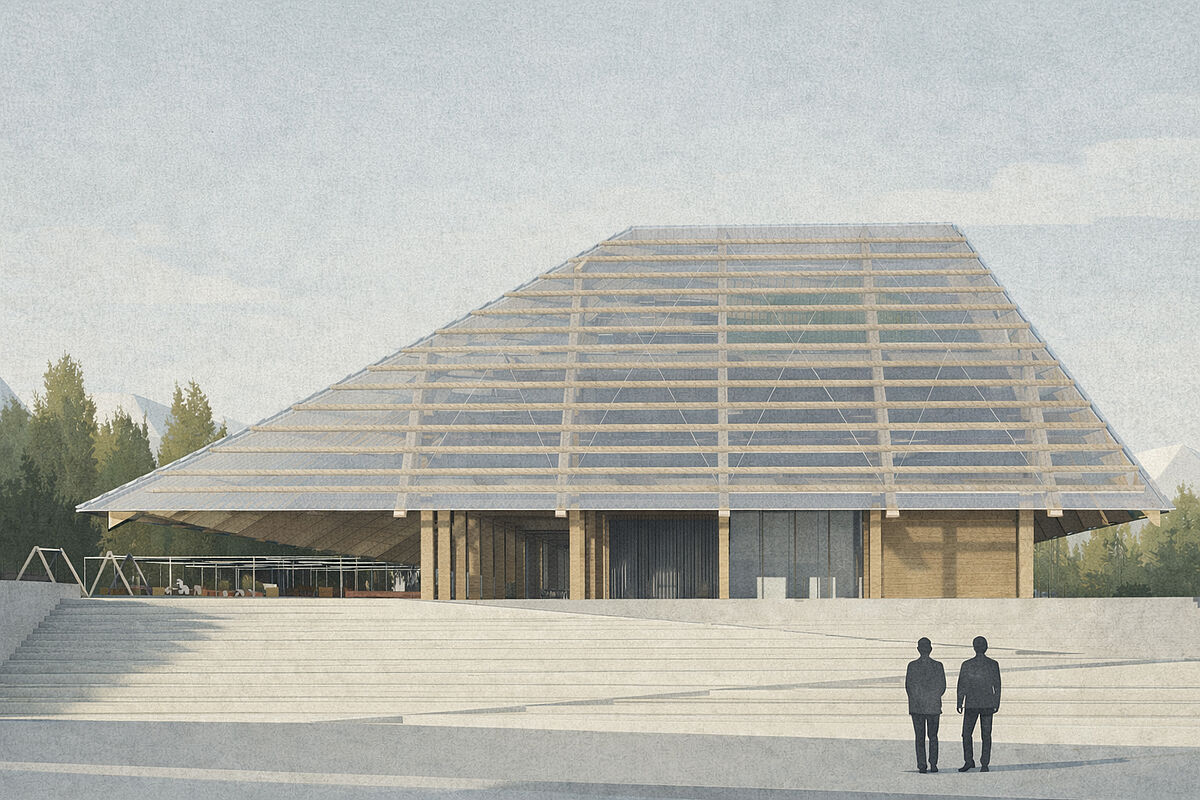
The long, narrow site next to the railway is treated as both physical and conceptual condition. Following the logic of infrastructural landscapes, the project is conceived as a low, horizontal and continuous system that organizes flows of matter, energy and people. Architecture is understood as a productive field rather than an object.
Structural Framework
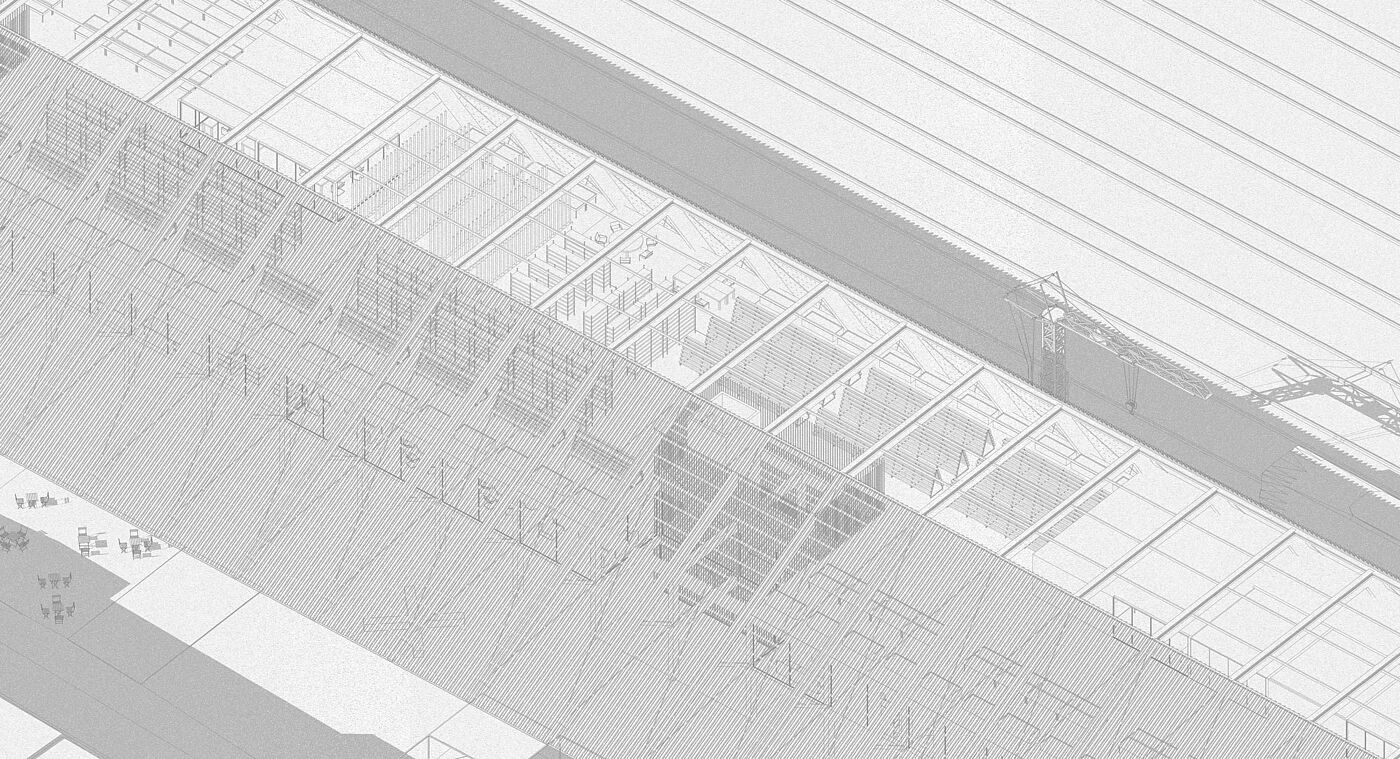
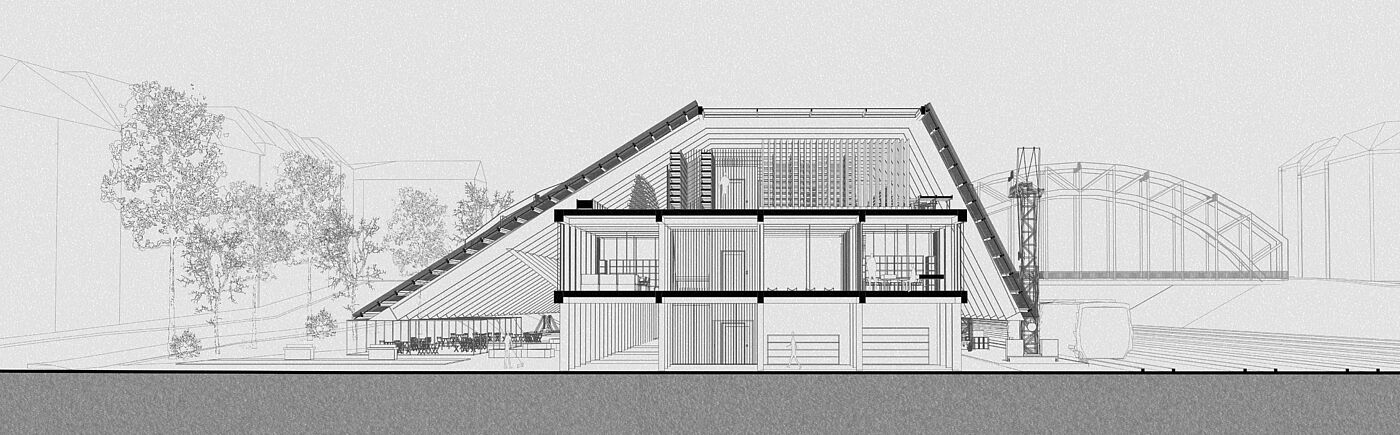
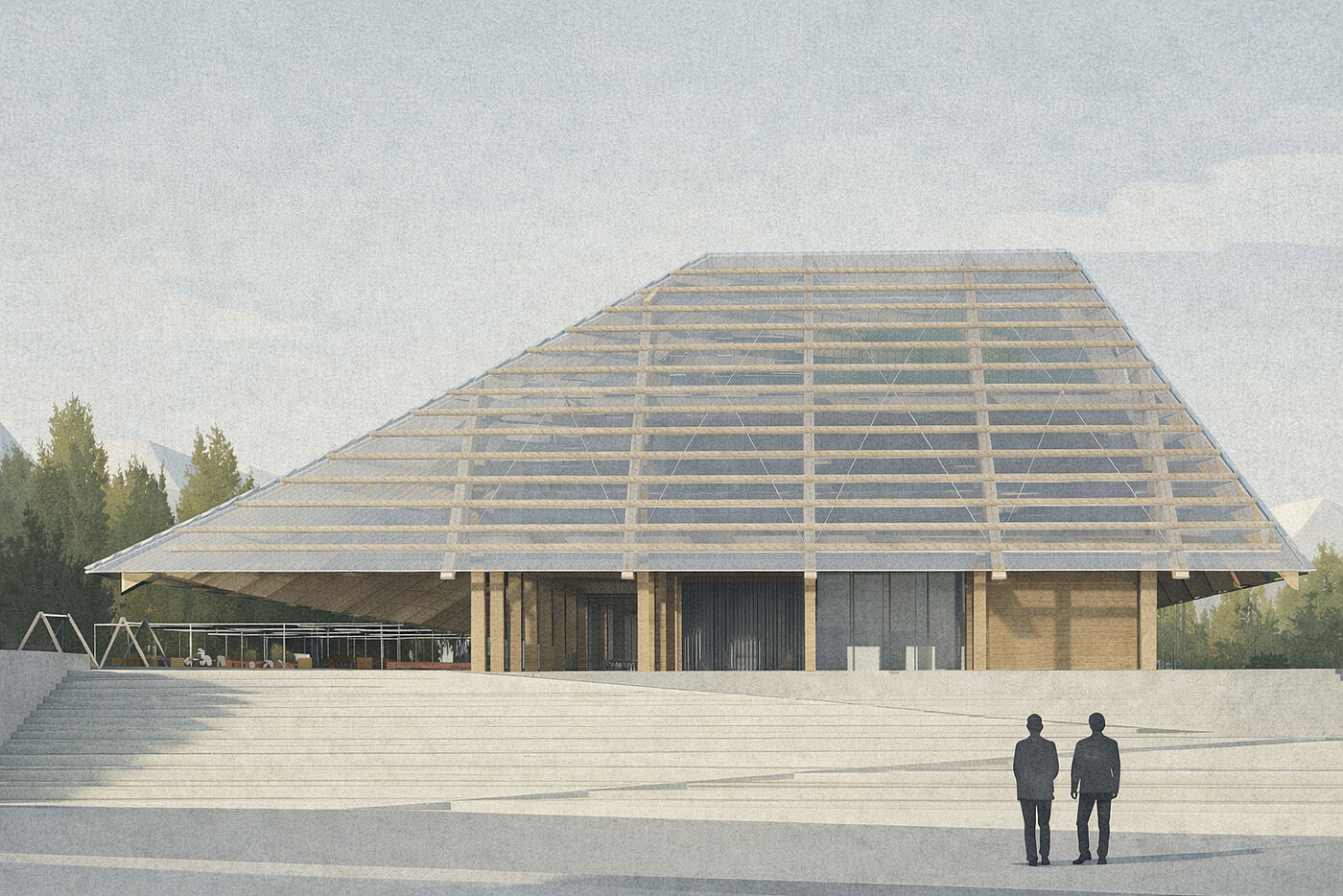
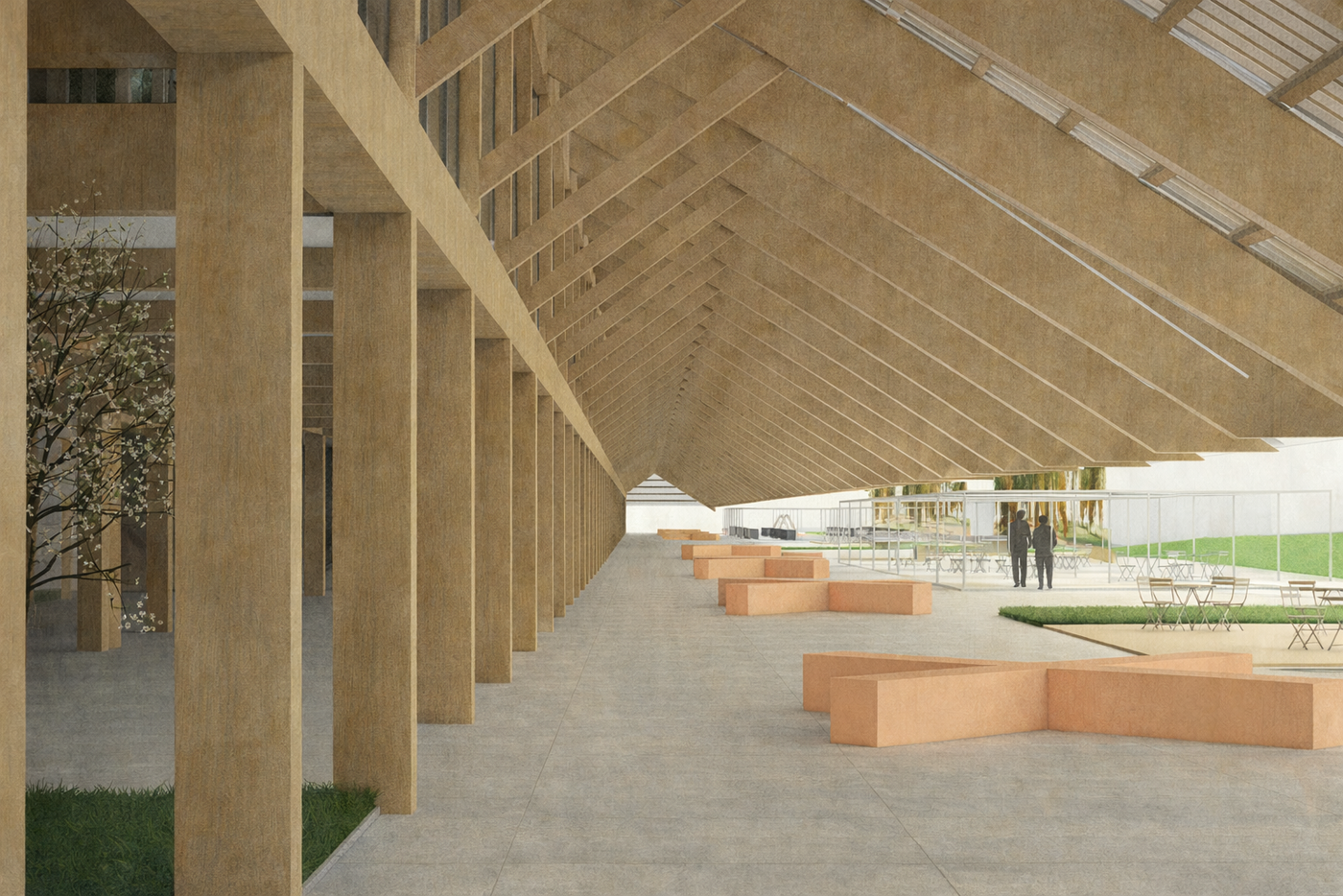
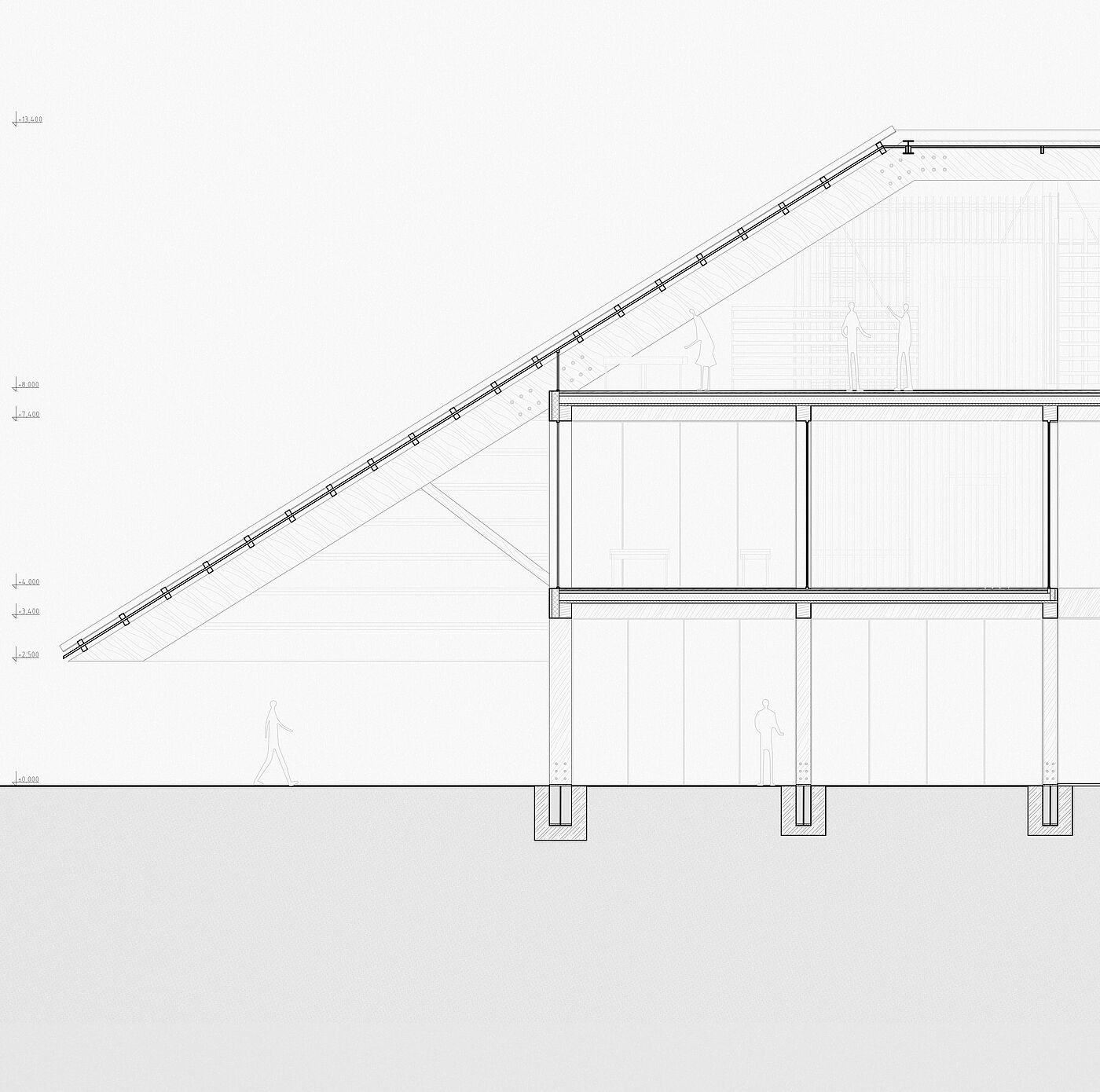
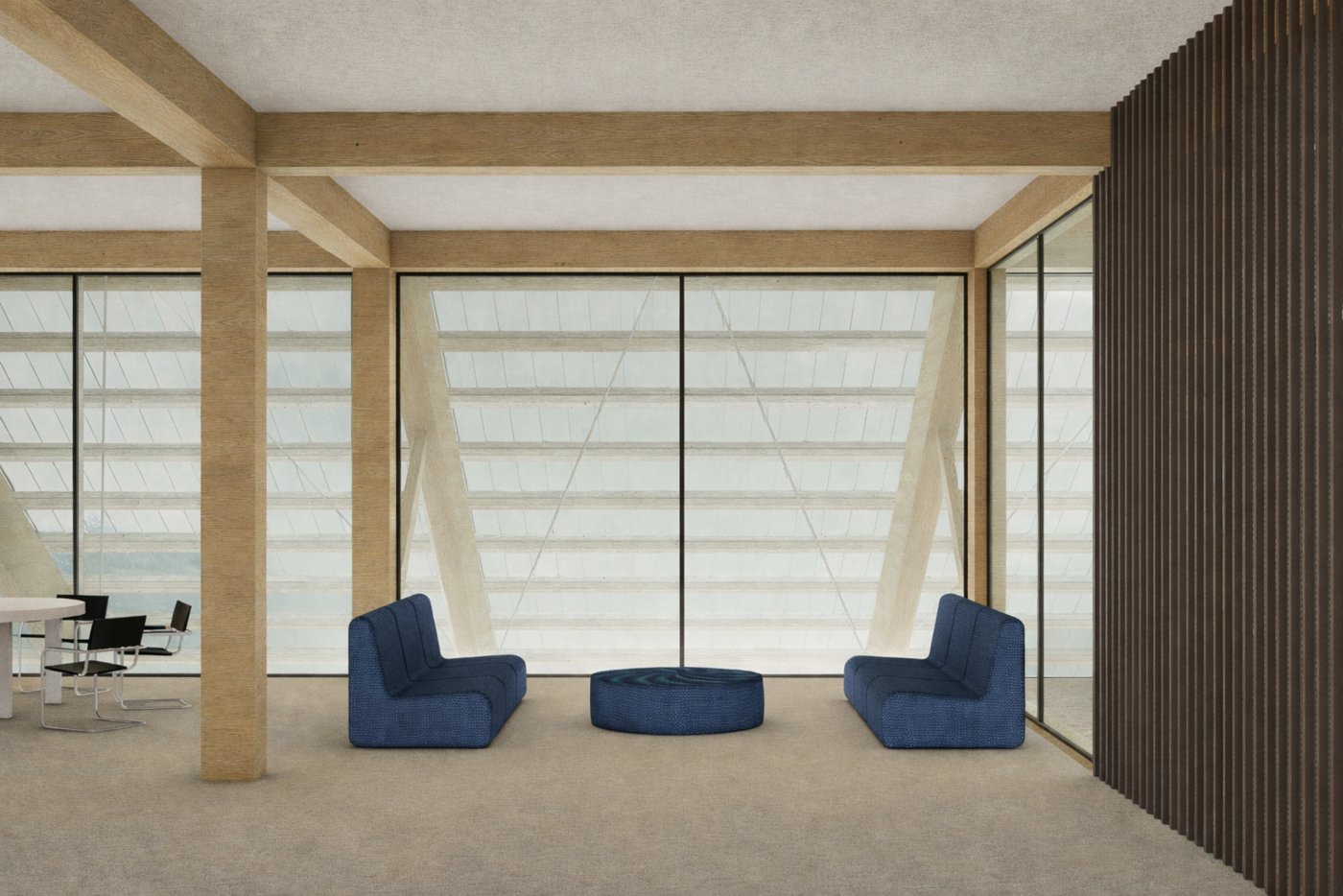
The building is structured as a wooden skeletal framework: a permanent spatial order capable of change. Within this open system, adaptable volumes and programs are inserted, allowing flexibility while maintaining a clear architectural identity. The skeleton defines the architectural grammar; the infill remains variable.
Programmatic Layering
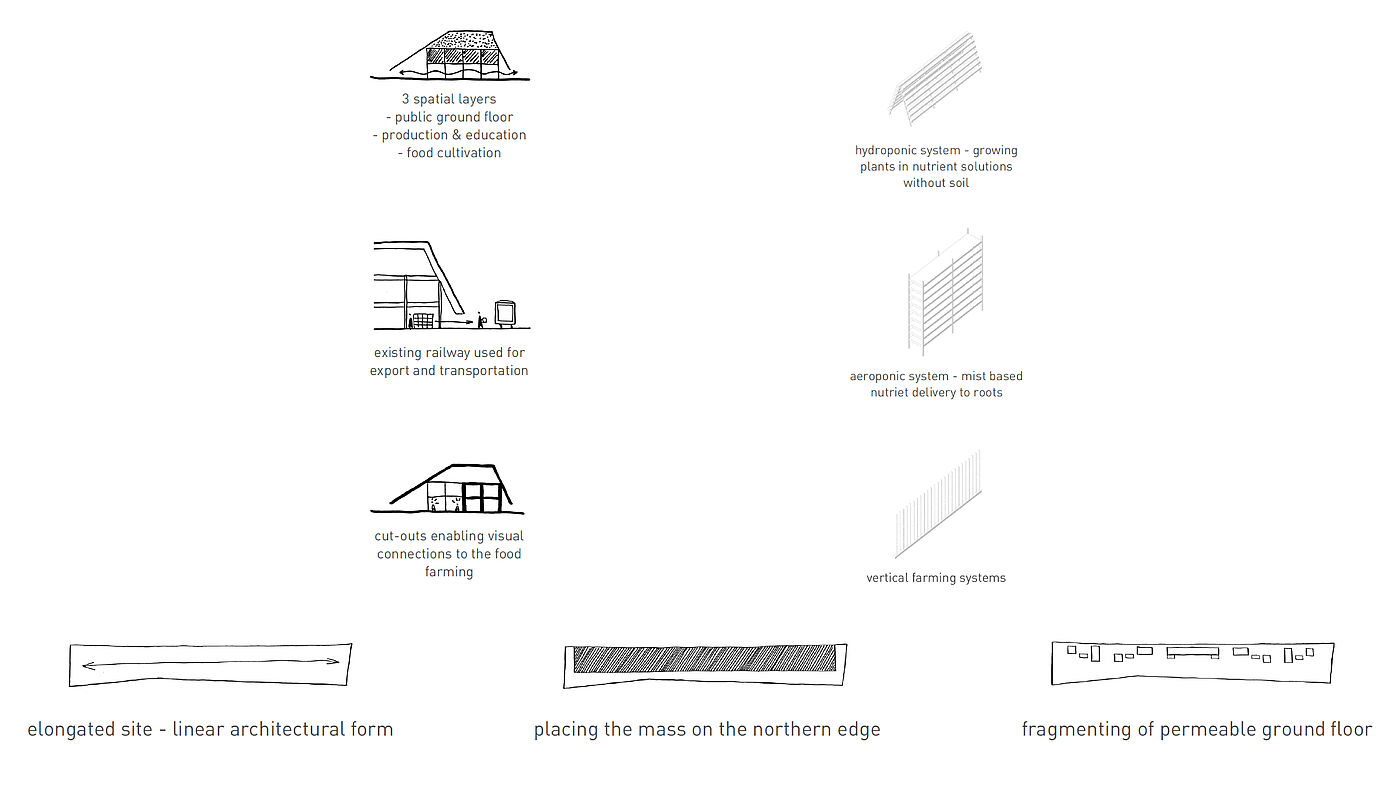
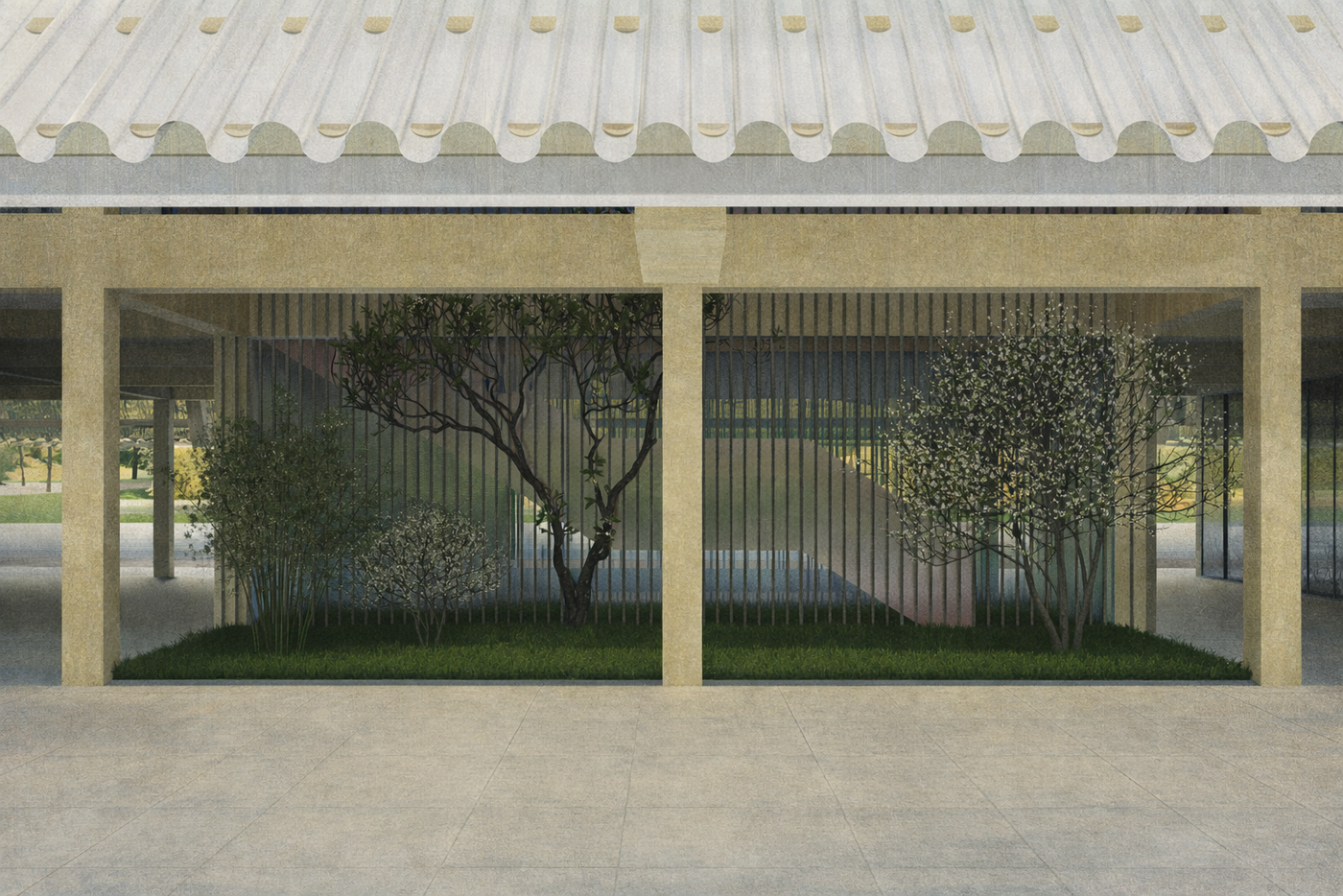
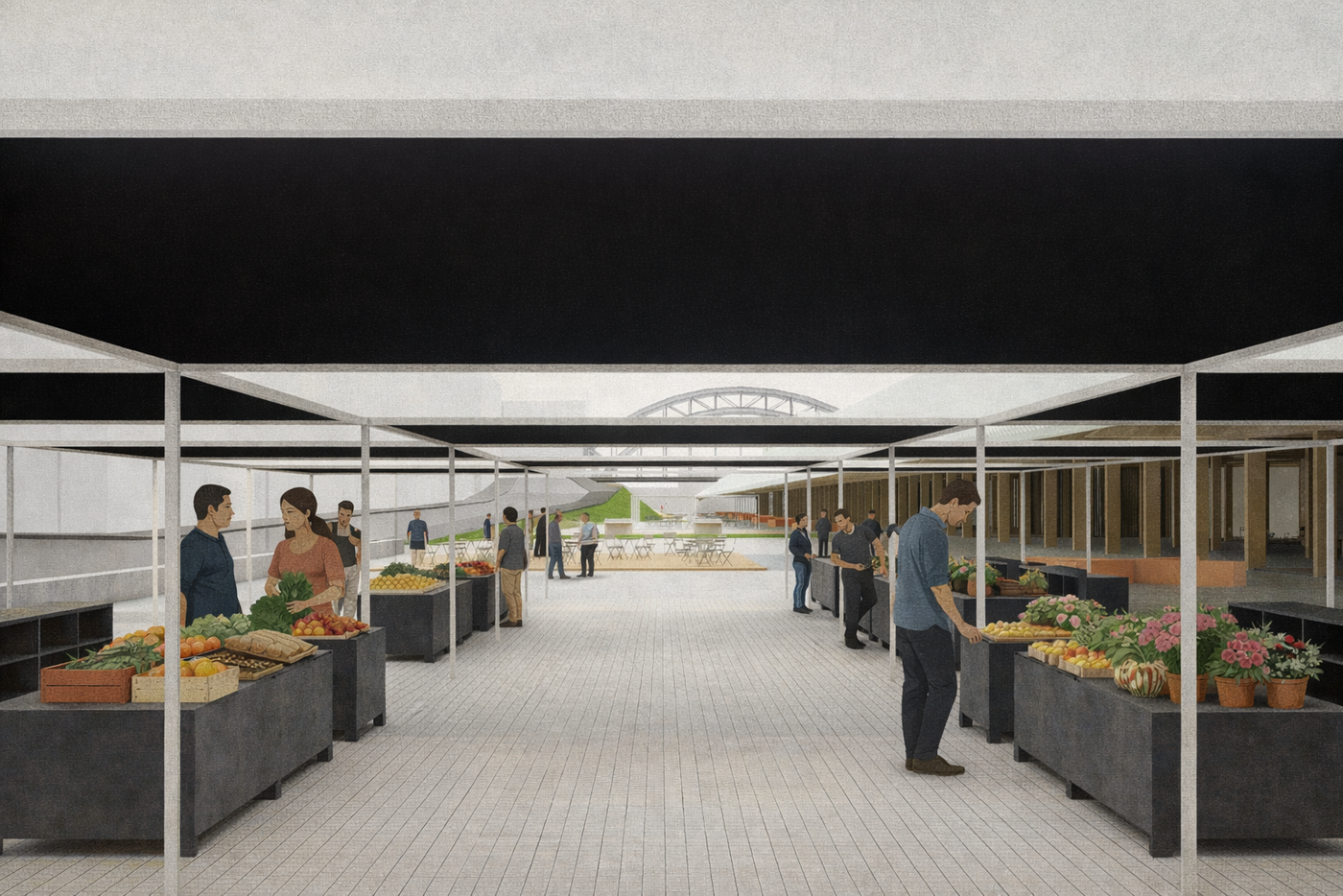
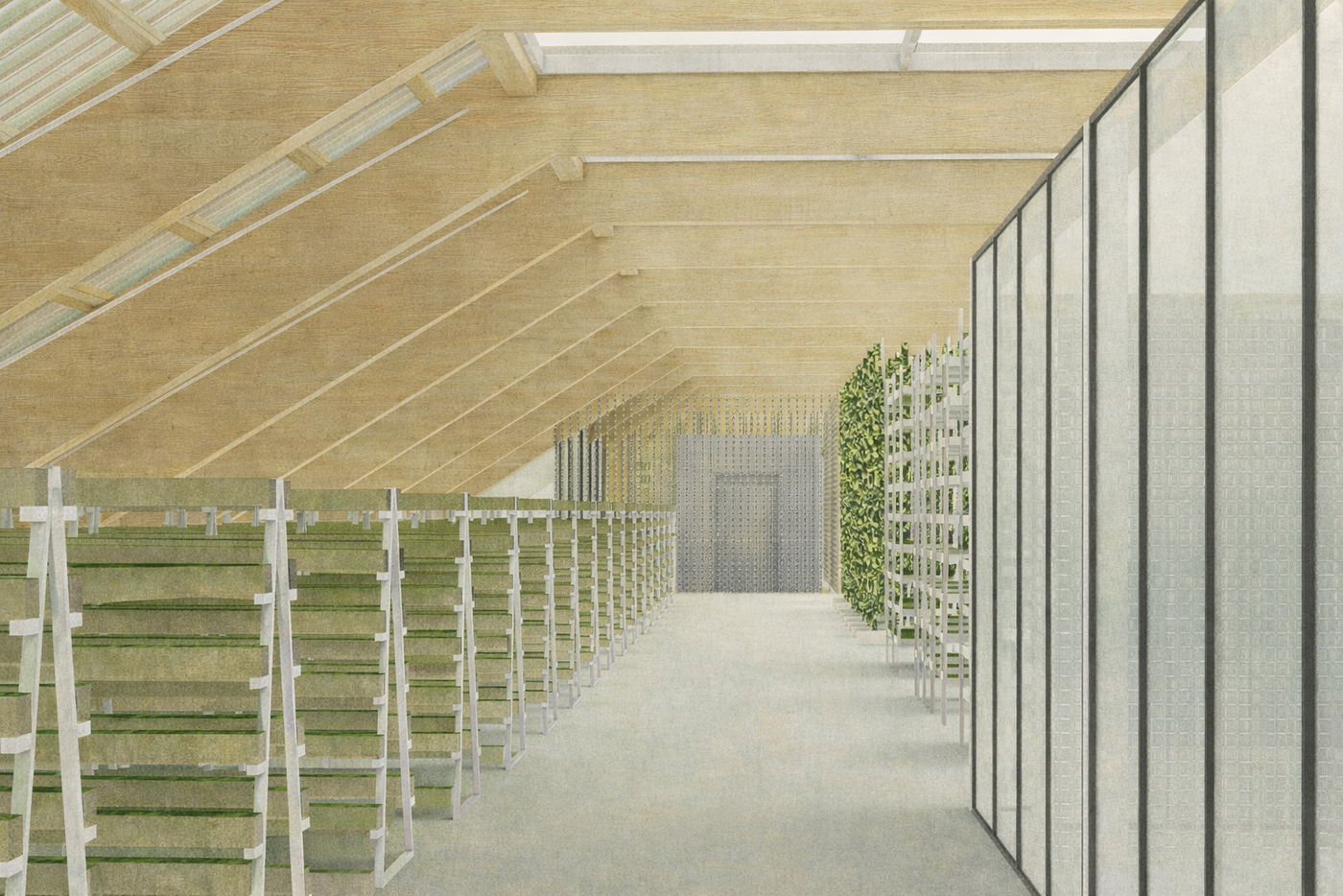
The project is vertically layered from public life to controlled production. The permeable ground floor acts as an urban passage connecting everyday activities and food culture. Above, production, logistics and education form a communicative core. The uppermost level is dedicated to cultivation, conceived as a greenhouse and environmental apparatus.
Visibility of Production
Cultivation is exposed and spatially articulated. Through visual connections and sectional relationships, processes of growth become visible within the public realm, allowing the building to act as both productive machine and medium of awareness.
Landscape and Topography
The existing topography is preserved as a counterpoint to the project’s linear order. The slope and greenery introduce landscape as an active layer, softening the infrastructural logic and anchoring the architecture in its site.
Architecture as Interface
The proposal explores architecture as an interface between natural processes and urban systems, redefining the farm as an open, legible structure within the city where growth, movement and public life intersect.