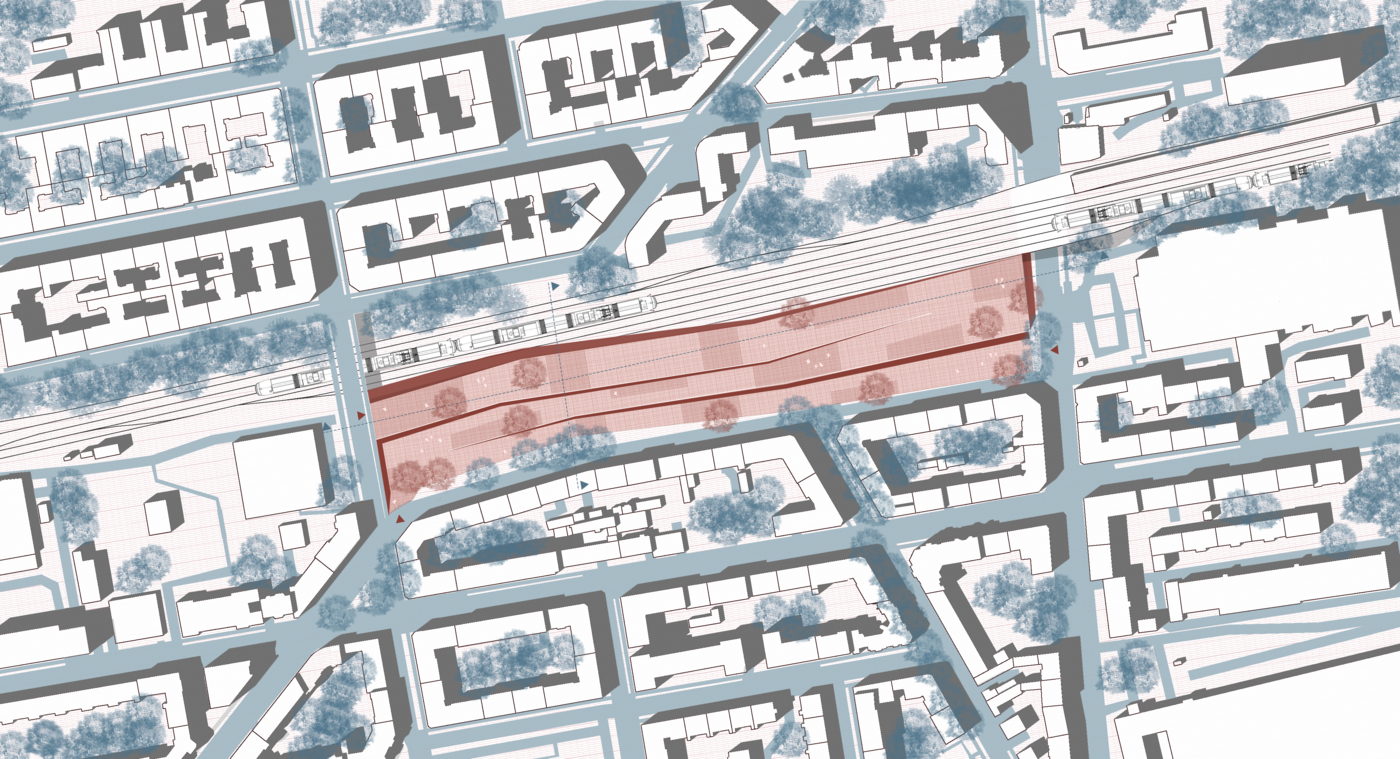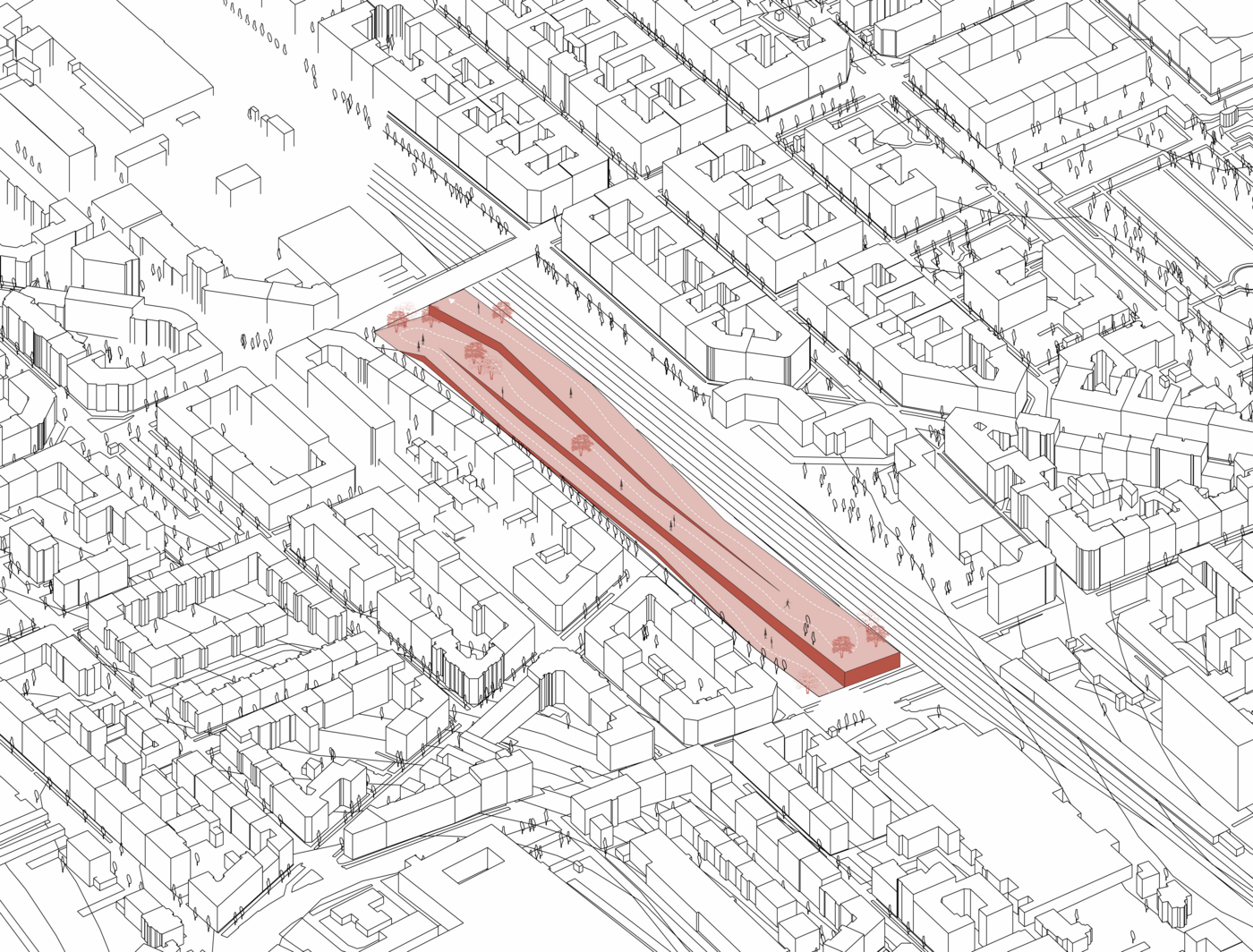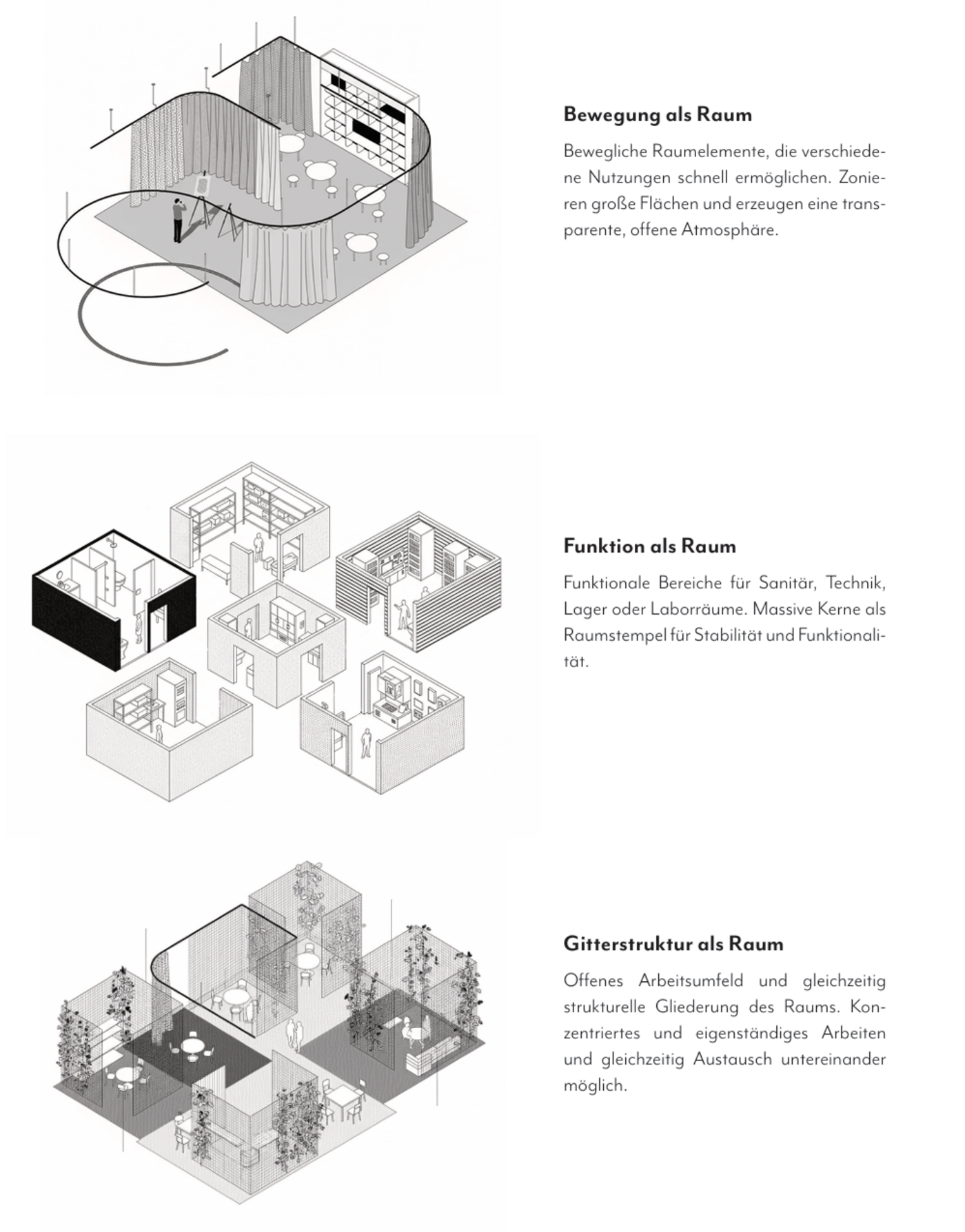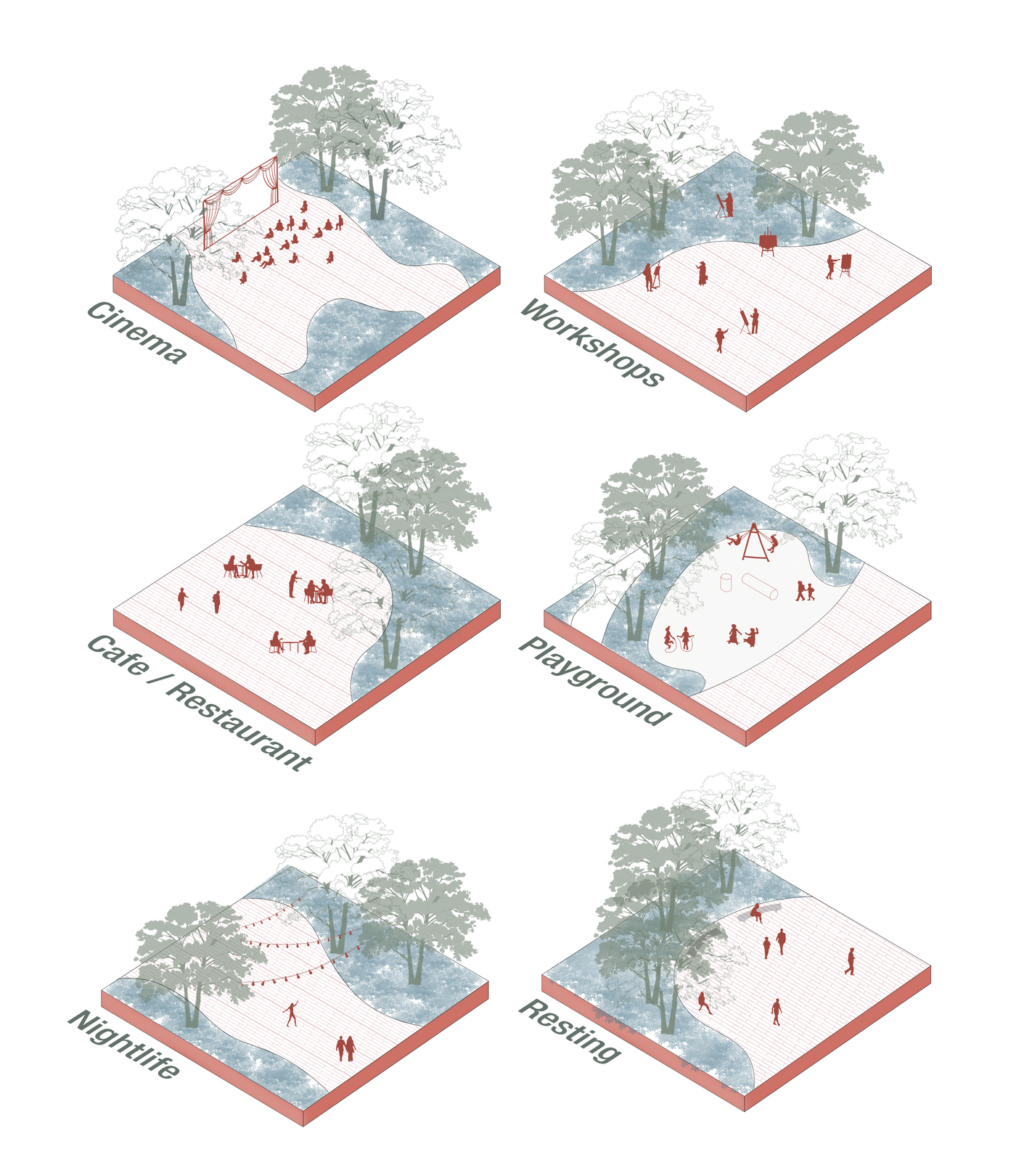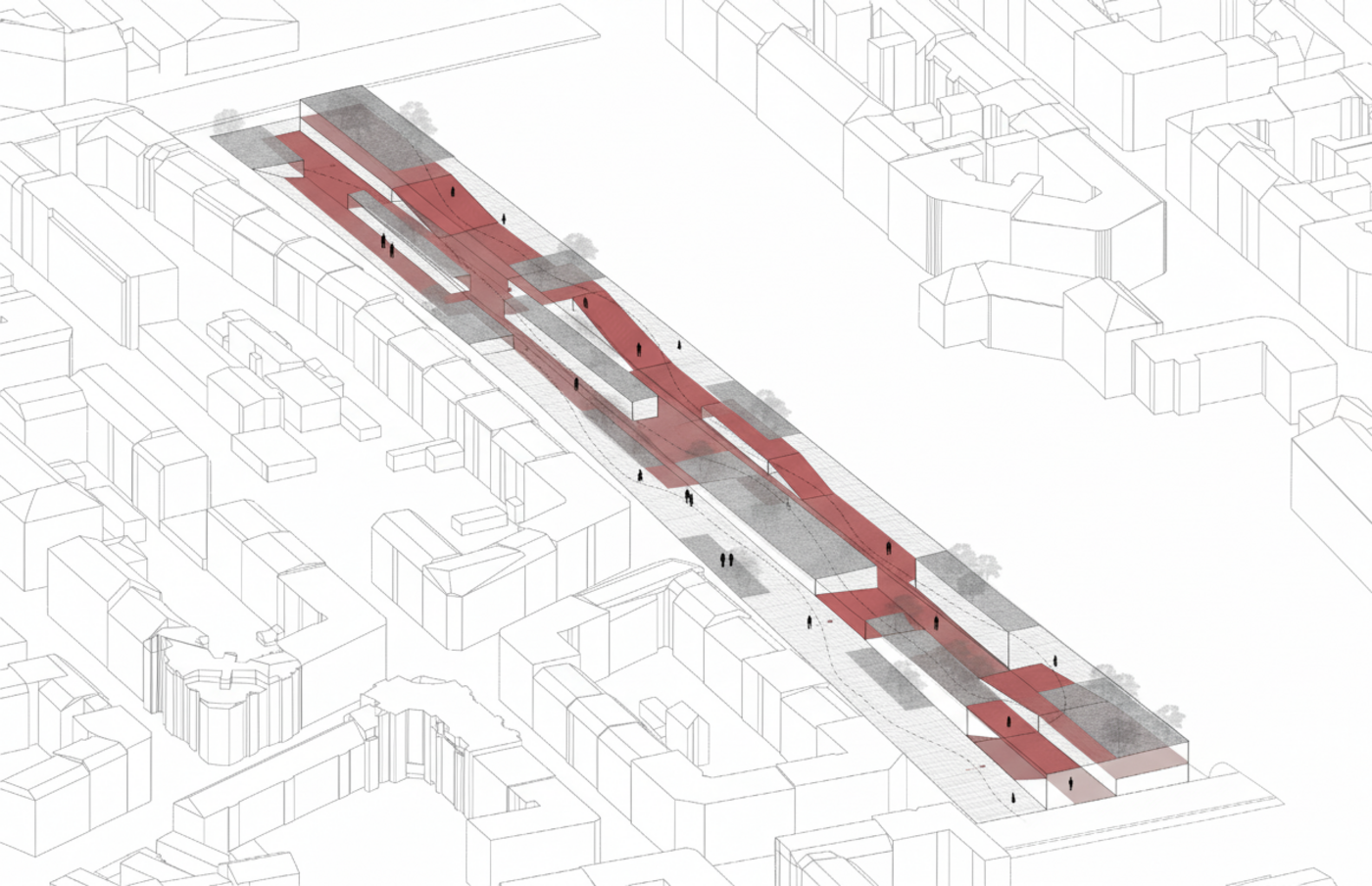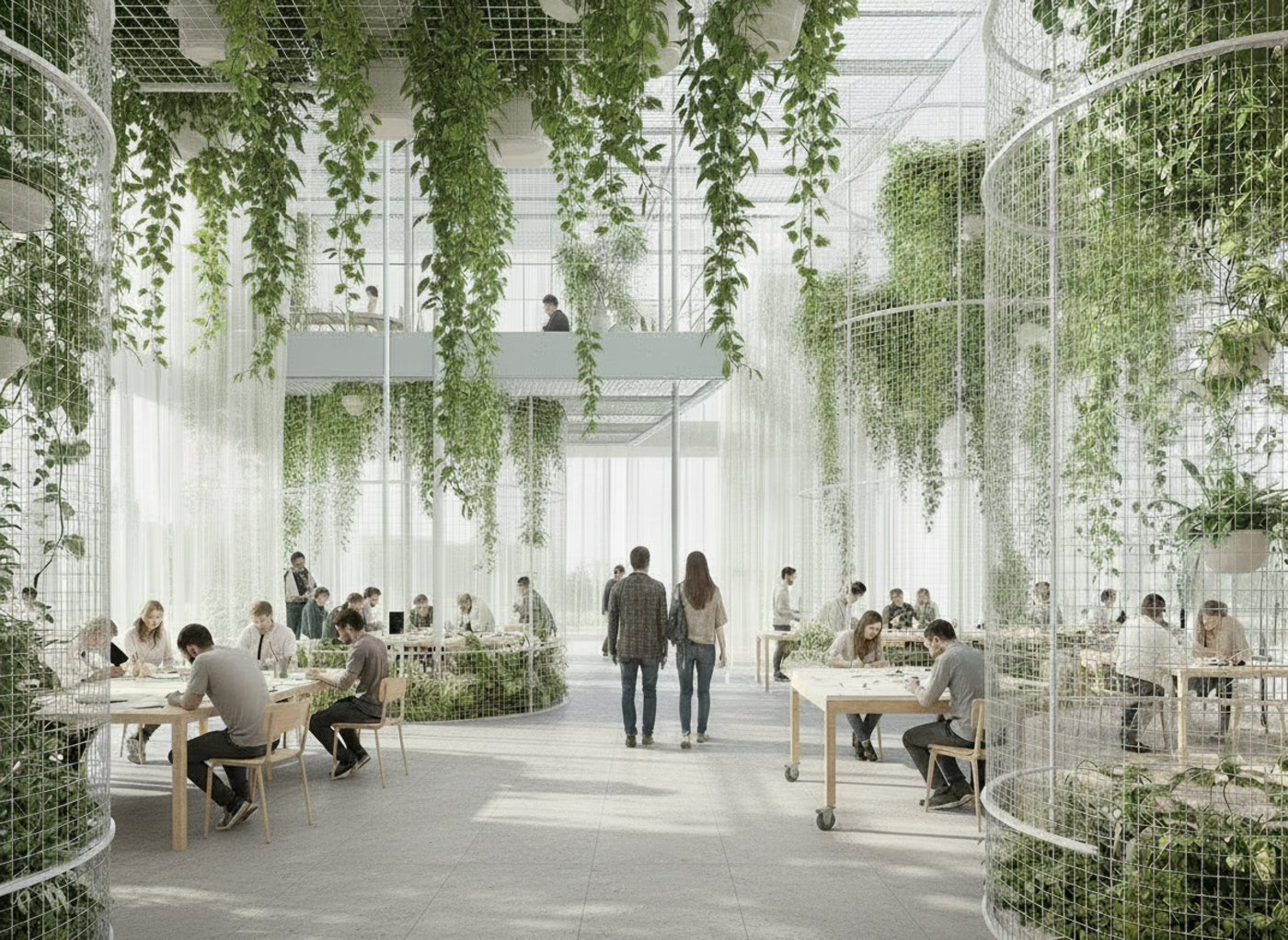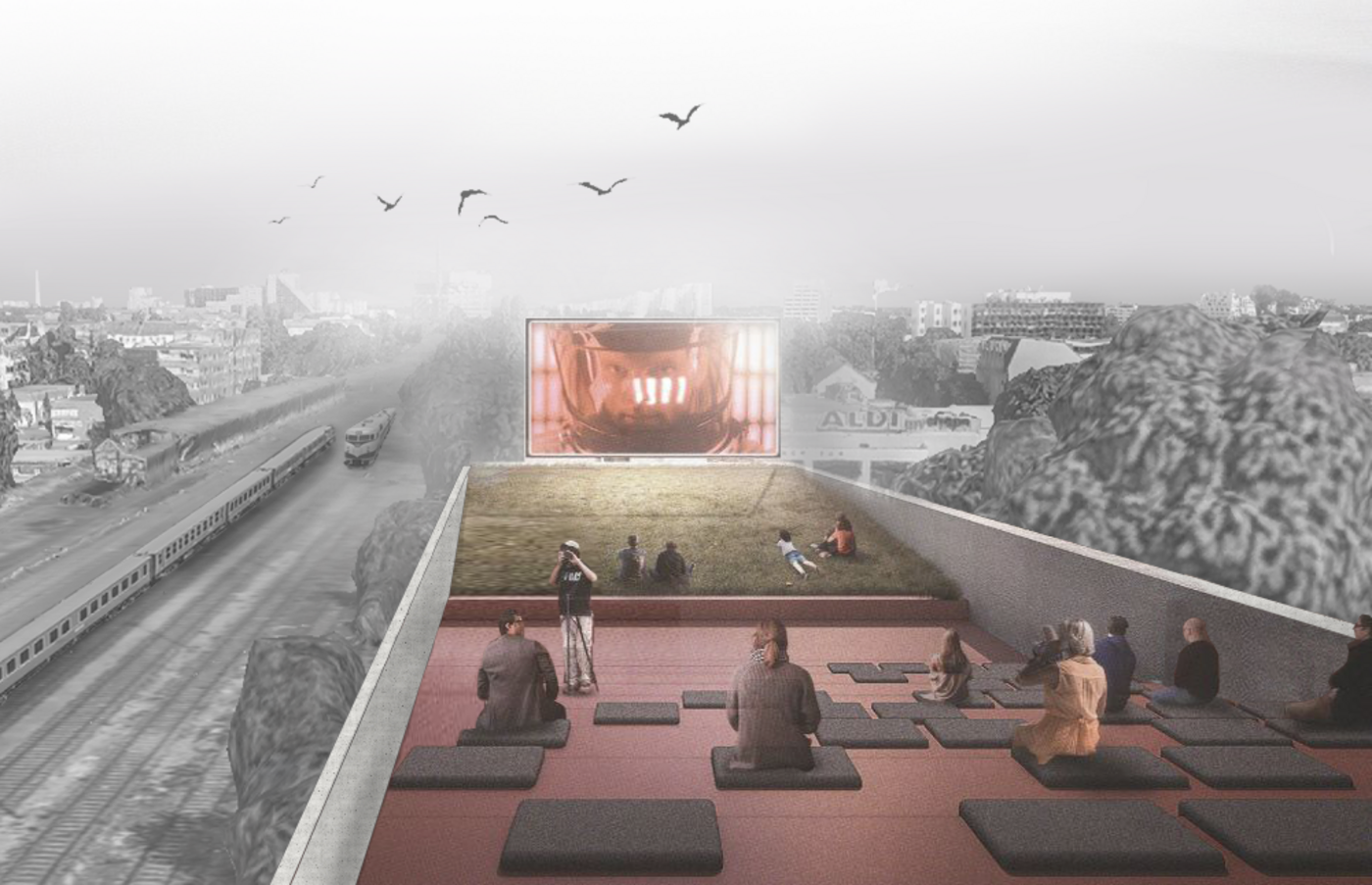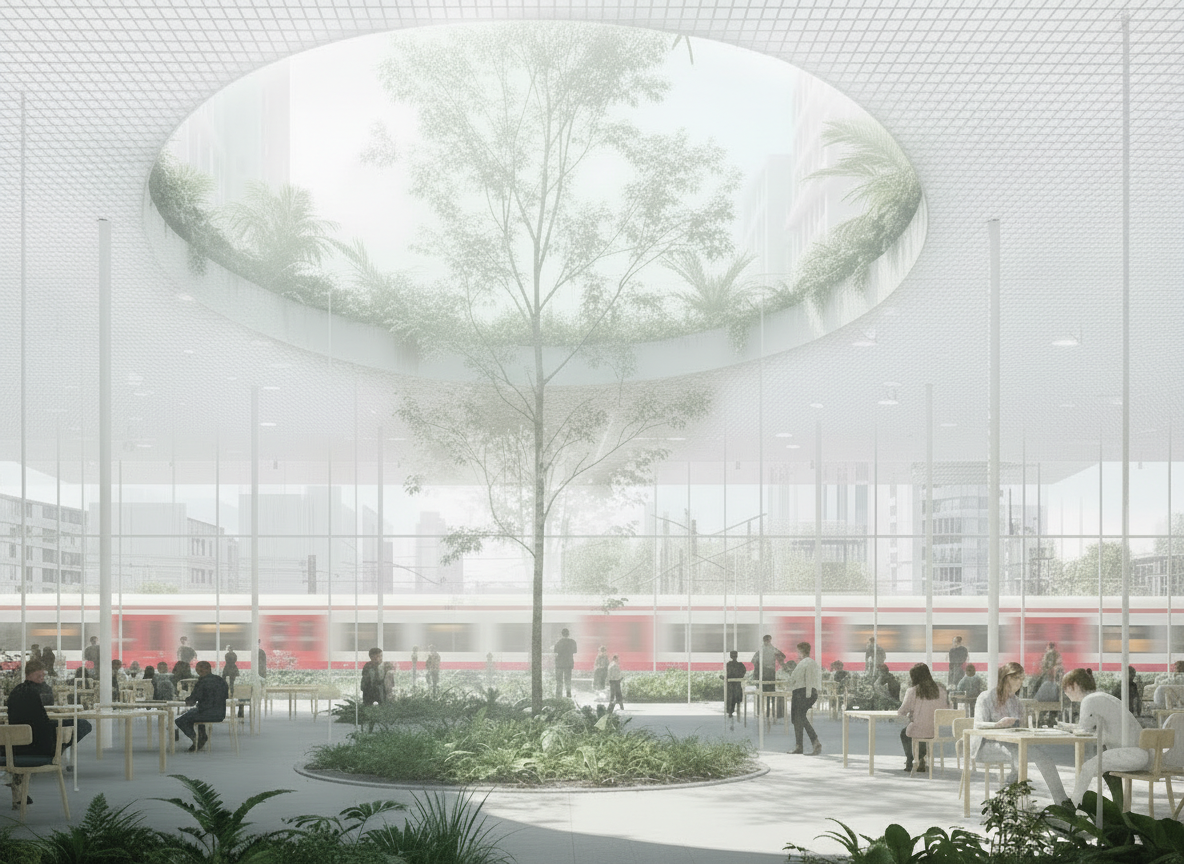
Based on the analysis of the site, it became clear that the surrounding residential area is very secluded, dominated by traffic and anonymity. What is especially missing is a place where all generations can meet—a communal space where new encounters happen and creativity can flourish. The project aims to create a place that spatially connects the underpass and the bridge, bringing the previously neglected site back to life. It is designed not only as a spatial, but also as a social connector, offering temporary uses such as creative workshops, leisure activities, and more private studios to foster a mixed, vibrant neighborhood. The exact use of the space will be determined by the residents, leaving room for f lexibility and new possibilities.
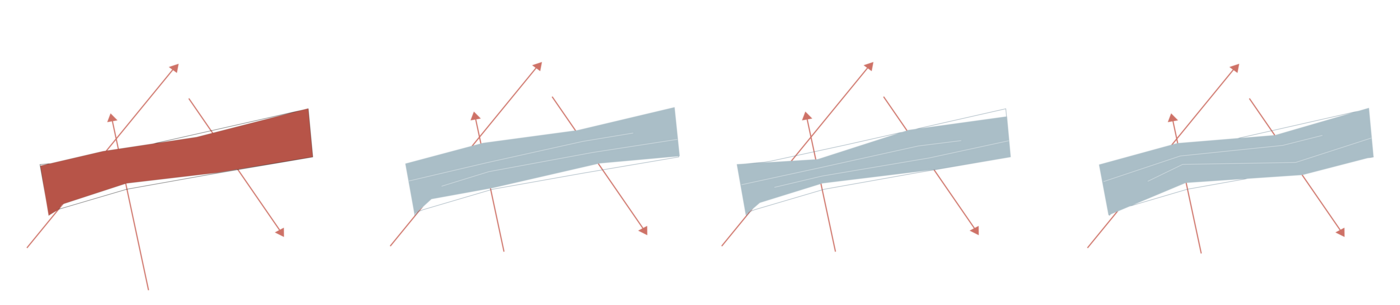
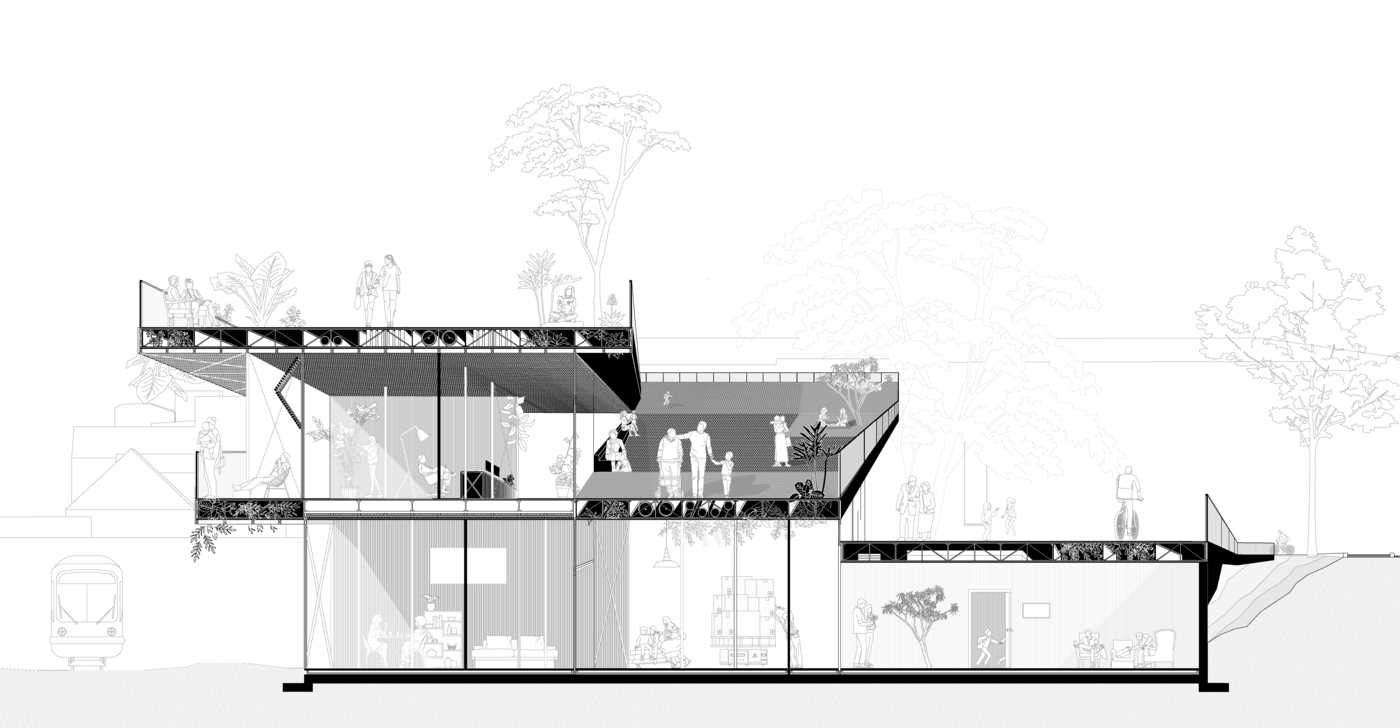
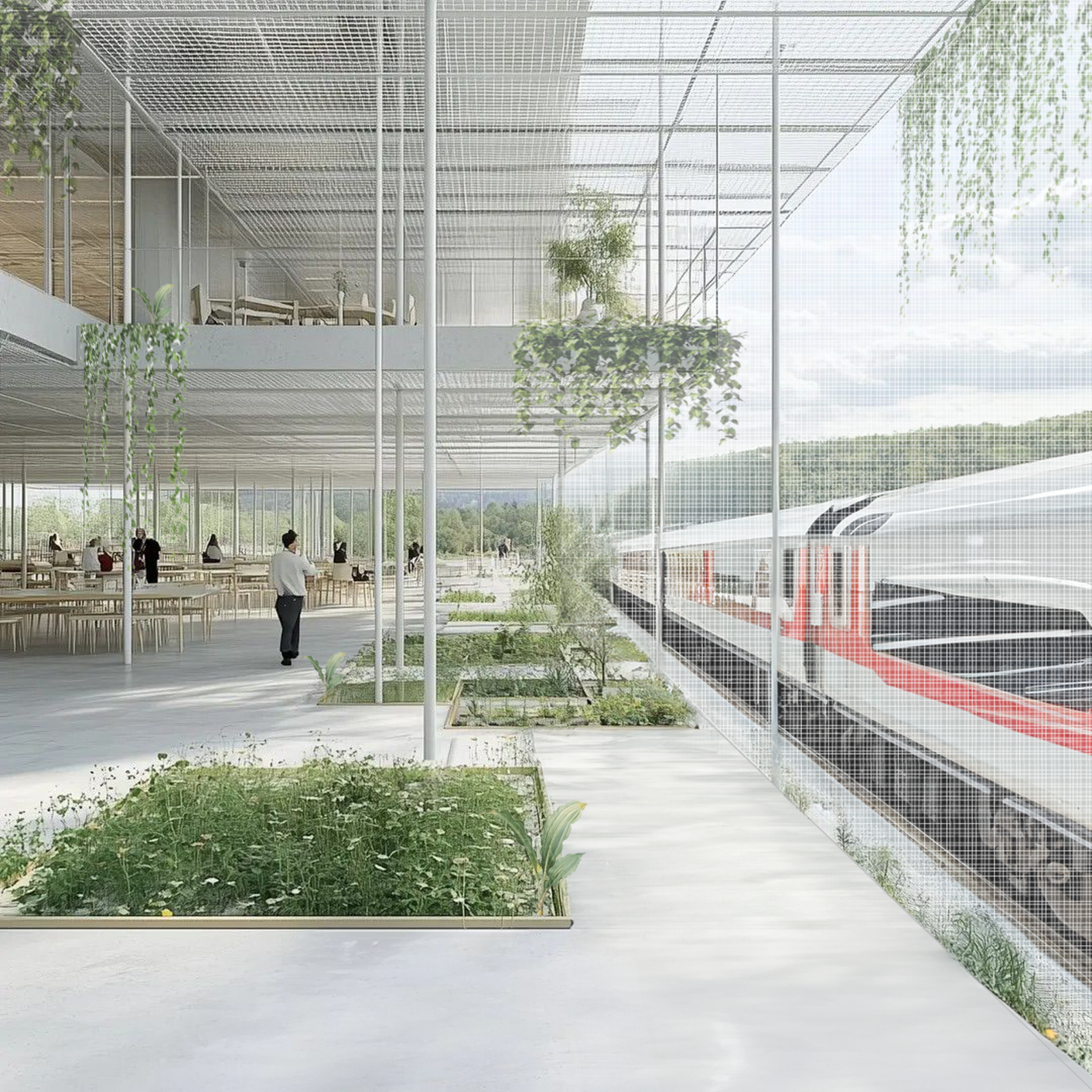
The increasing height creates a clear separation from the railway tracks, while framed views establish visual connections between visitors and the tracks in both the interior and exterior spaces, turning the infrastructure into an active part of the spatial experience.
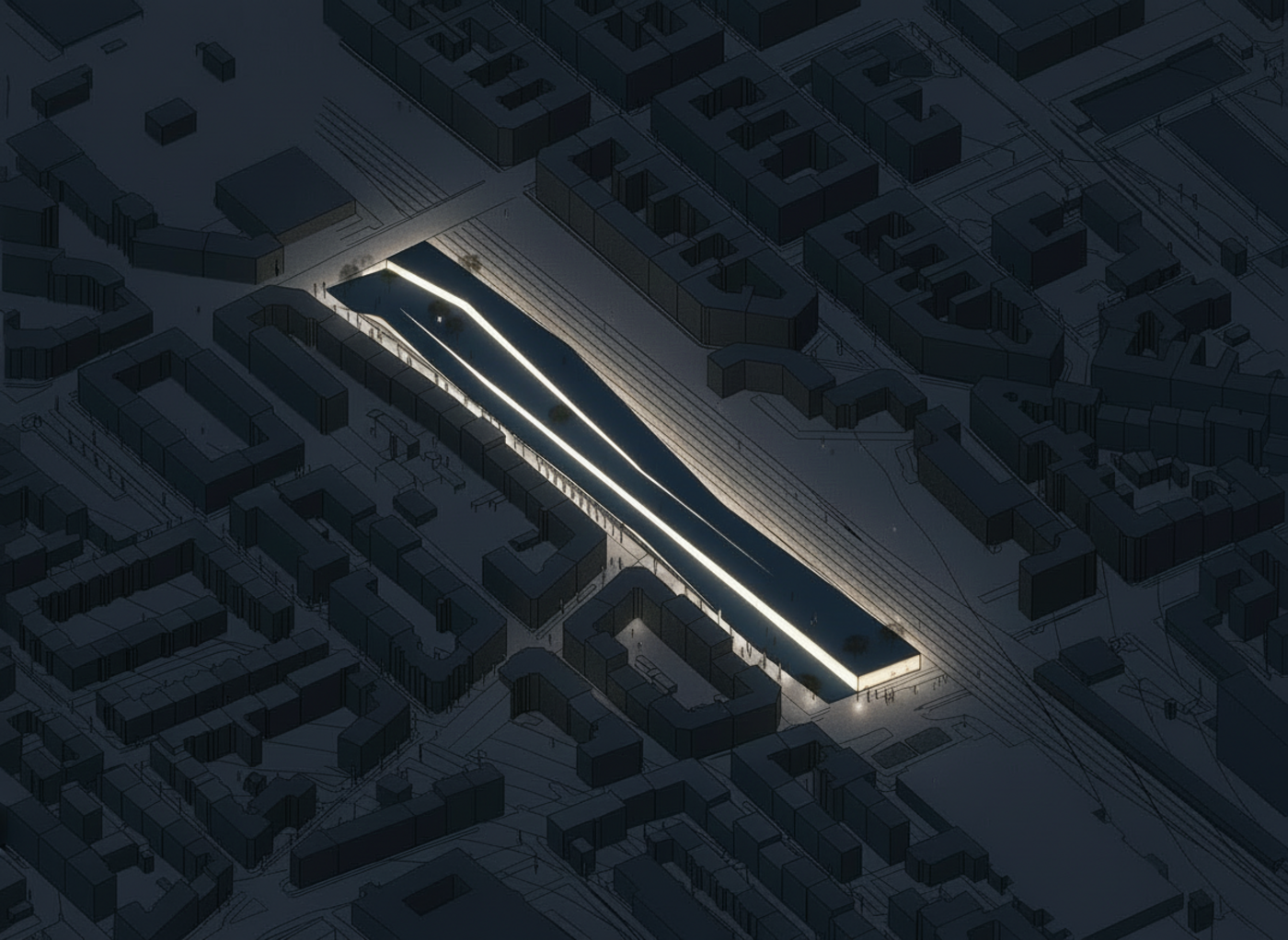
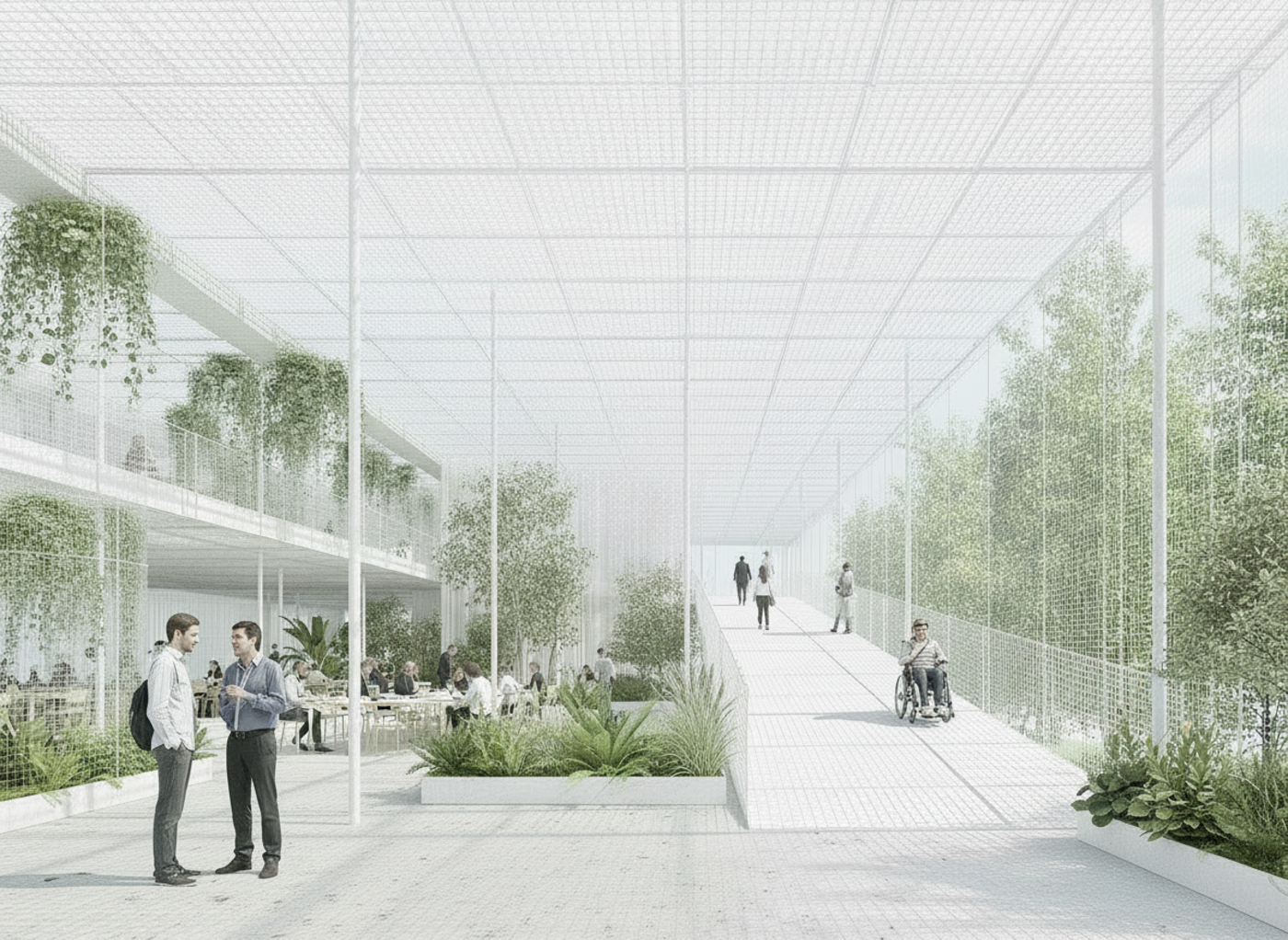
The infrastructure integrates into the surroundings like a ramp, connecting the lower street with the Teterower Bridge. In darkness, the landscape structure is highlighted through illumination, emphasizing the upper circulation. The nighttime lighting responds to the daylight conditions.
The ramp functions as both circulation and space of inhabitation, hosting temporary use. It becomes an open platform where different generations and diverse groups meet, interact, and share space. Nature intertwines with infrastructure. Levels dissolve, creating a space of plants and living systems. The infrastructure transforms into a living organism. The structure merges with nature, becoming part of the landscape, harmoniously integrating while filling gaps in the topography.
The architecture is based on a steel structure with mesh-panel elements, creating the potential for an indoor biotope. The interior dissolves into a self-sustaining organism: self-growing mycelium panels and algae panels regulate the climate, while filtering air and water to maintain a healthy indoor environment. These panels contribute to the biological material cycle, produce oxygen, and absorb CO₂. The façade design thus supports a comfortable and productive interior climate without relying on fossil resources. The building functions as a self-sustaining body, requiring no external inputs and becoming a source of energy and life.