CONCEPT | shape and principle
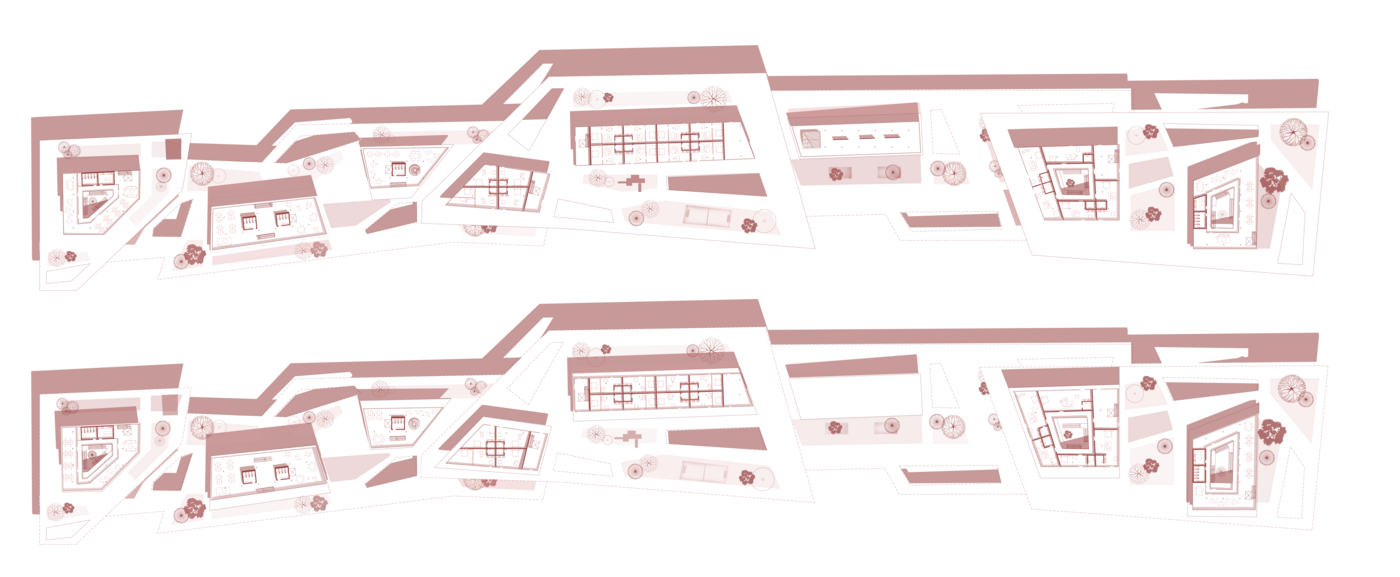
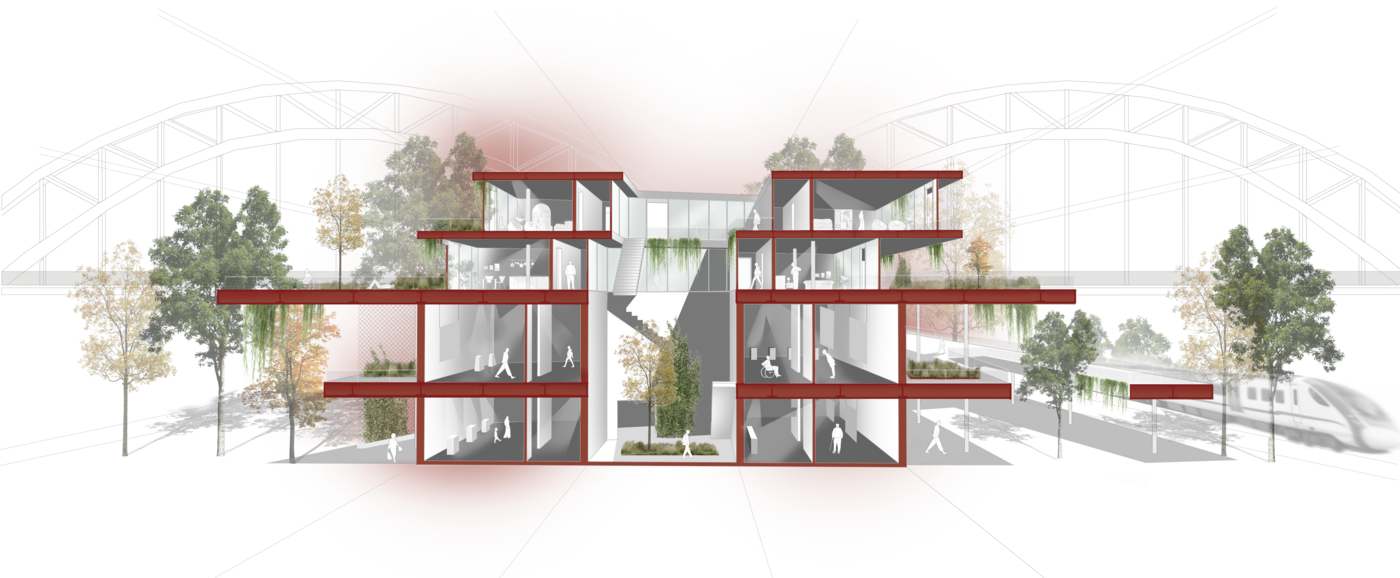
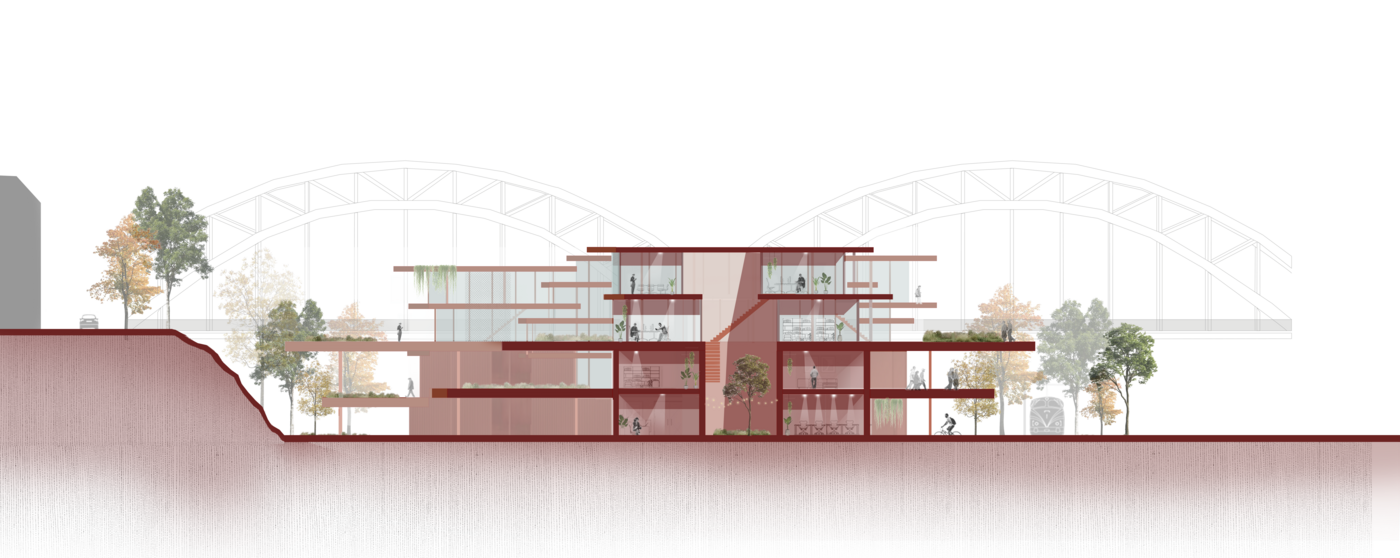
The project originates from the irregular character of the site next to the Hertabrücke which describes a leftover urban fragment defined by shifting topography, railway tracks and stacked material storage. Inspired by the Japanese term Zure Zure, meaning slight displacement or misalignment, the design explores the potential of shift as an ordering principle. A vertical system of plates with varying heights with horizontally shifted building plates creates the design. They investigate how architecture can translate movement, friction and irregularity into a coherent spatial identity, forming a new urban quarter defined by layered public zones, gradual privatisation and continuous circulation across the fragmented terrain
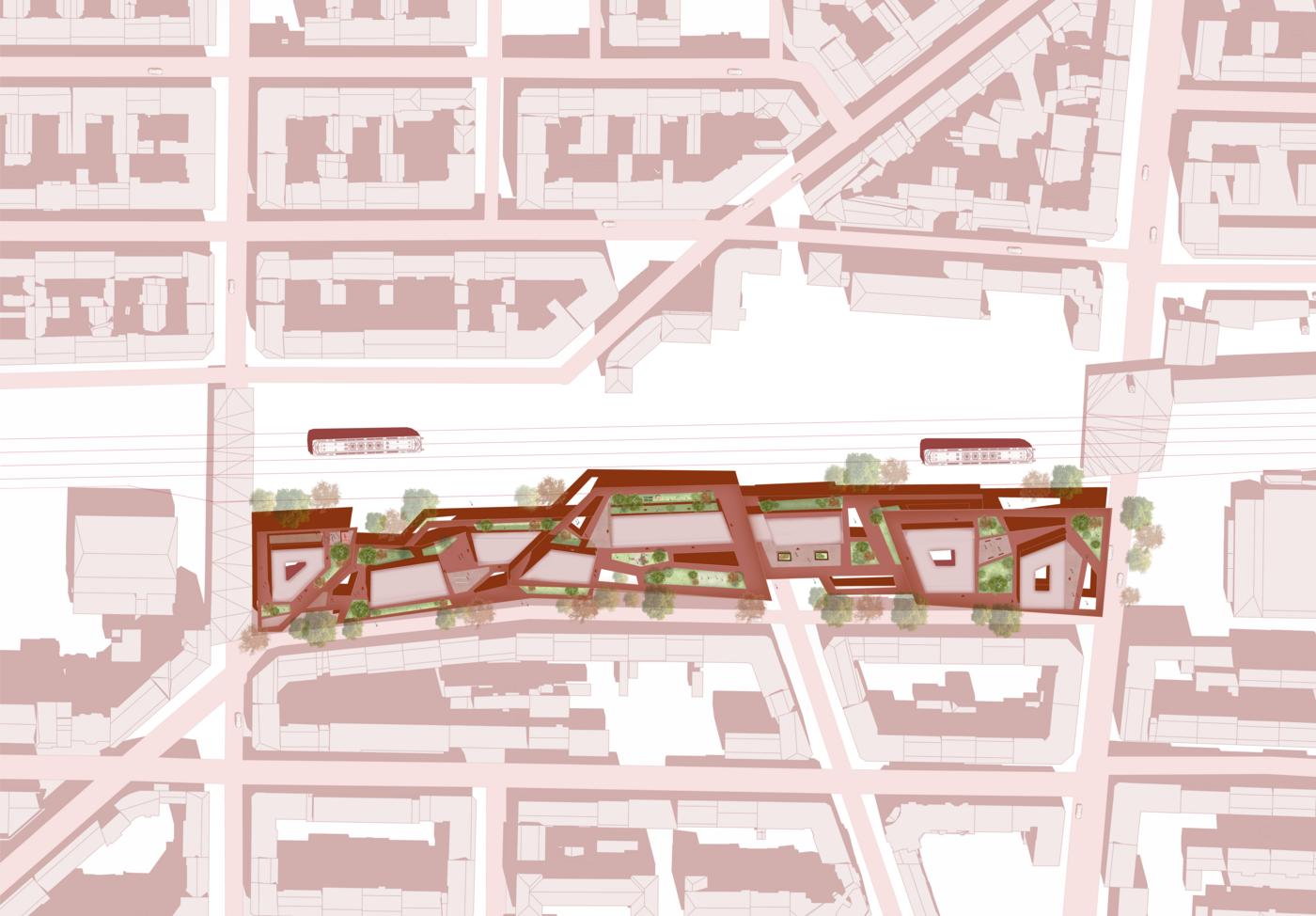
LANDSCAPE | urban planning
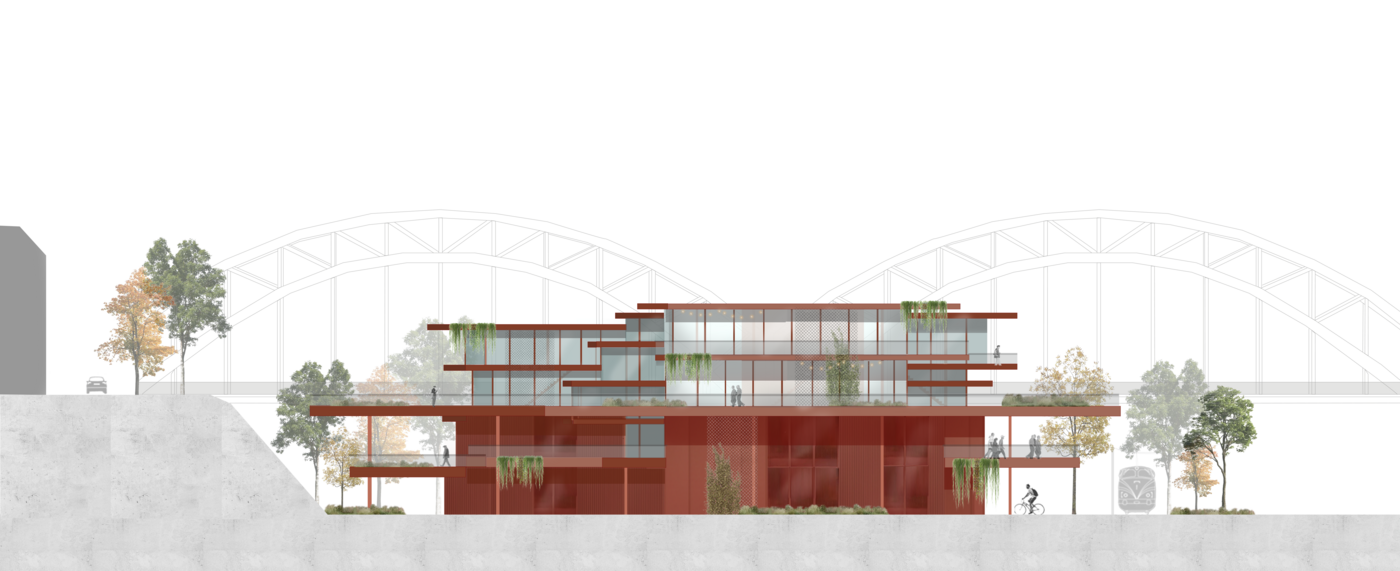
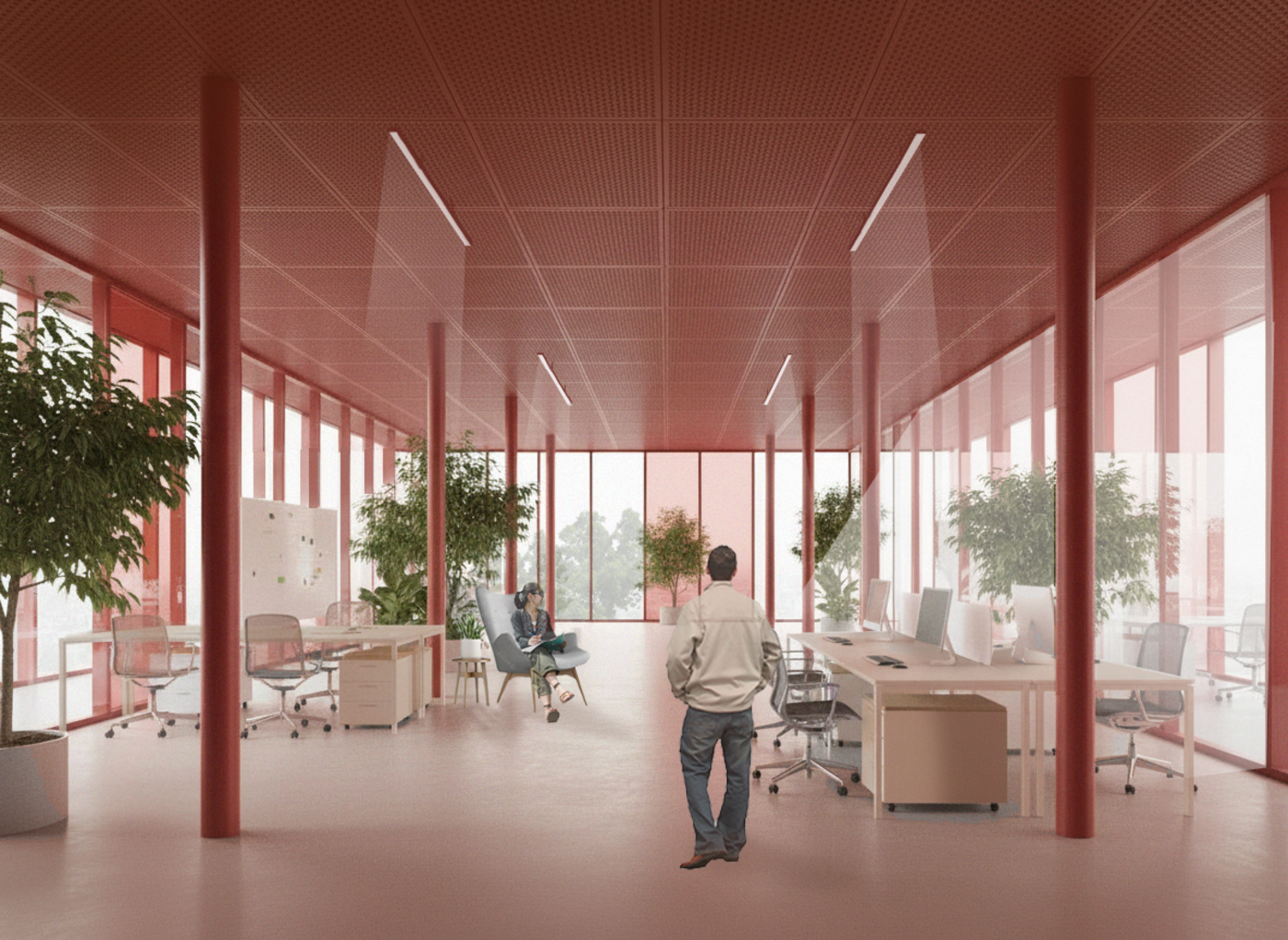
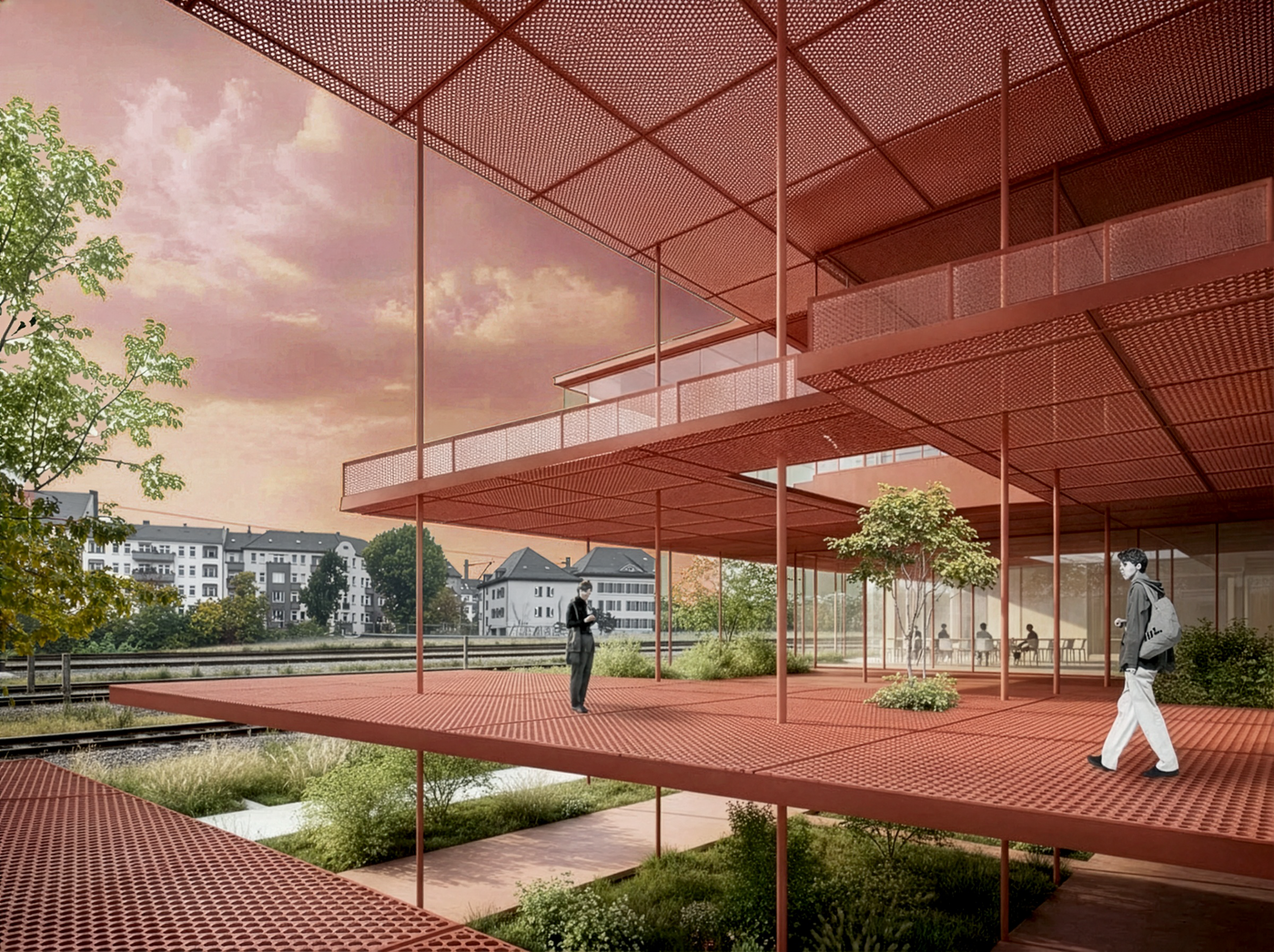
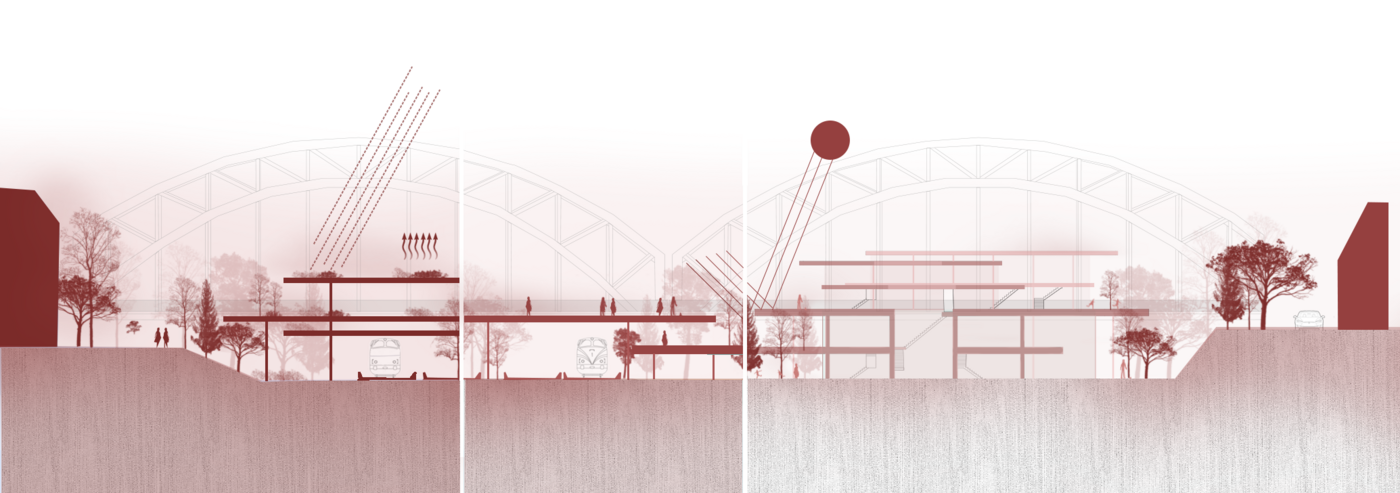
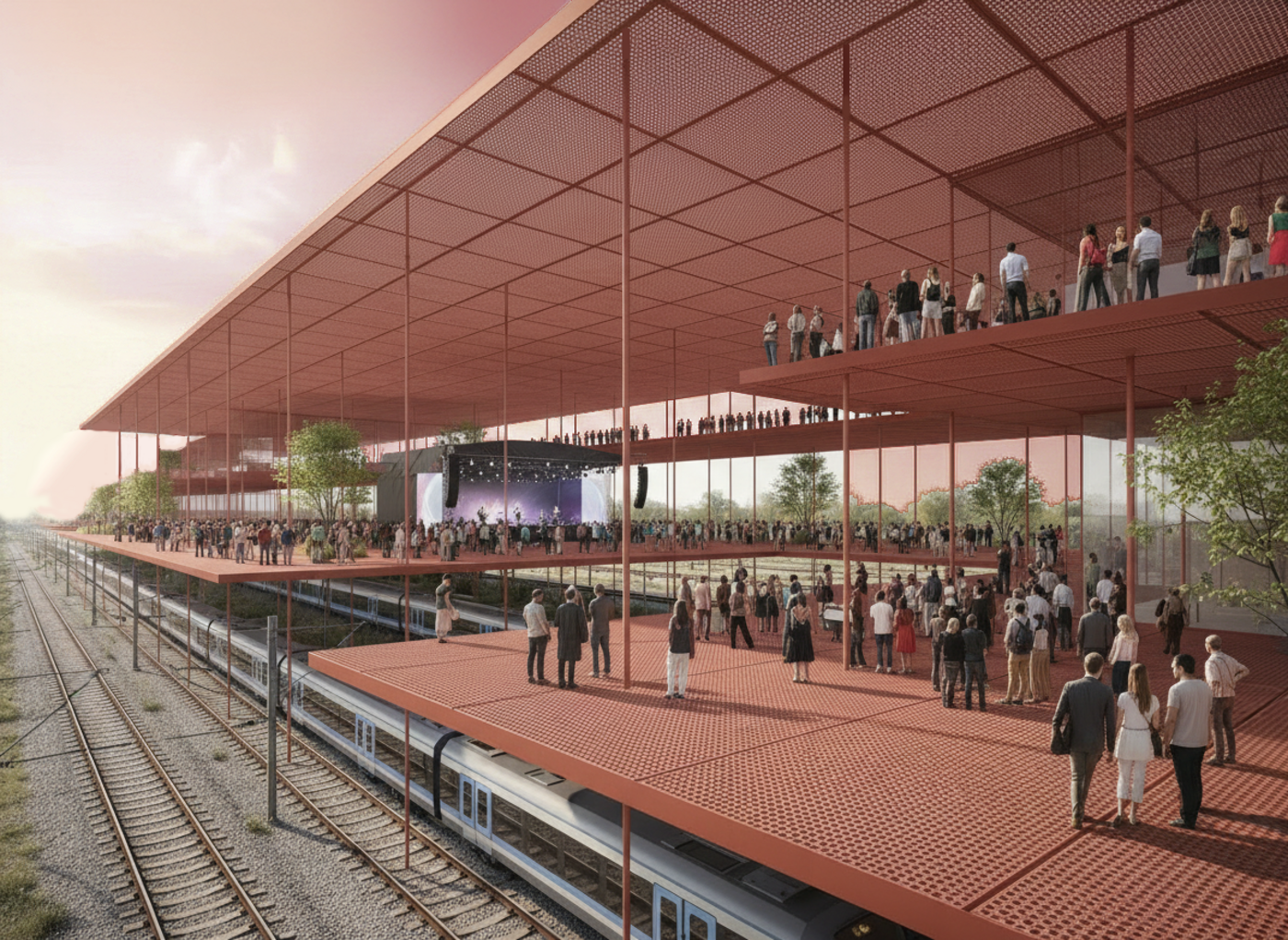
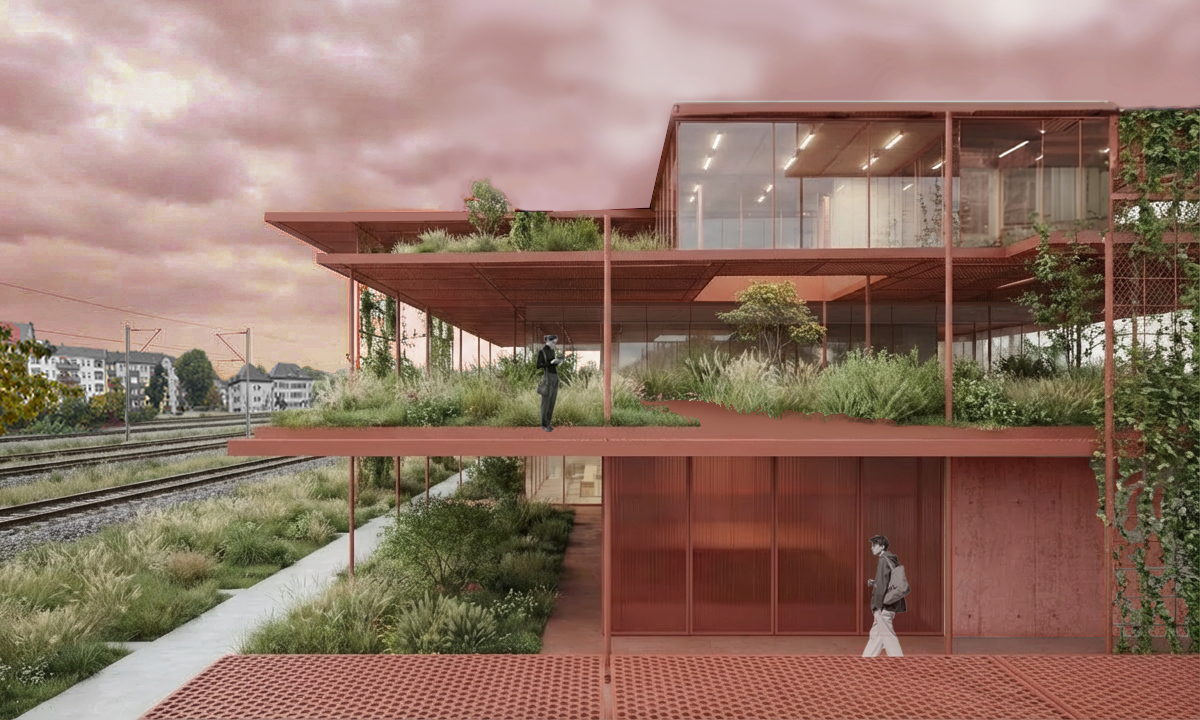
The construction is defined by a lightweight system of red perforated steel plates and slender steel columns. The open steel structure allows for flexibility, disassembly, and future adaptation, while layered green pockets are placed on top of and between the plates, creating shaded spaces, microclimates, and a productive relationship between structure and landscape.
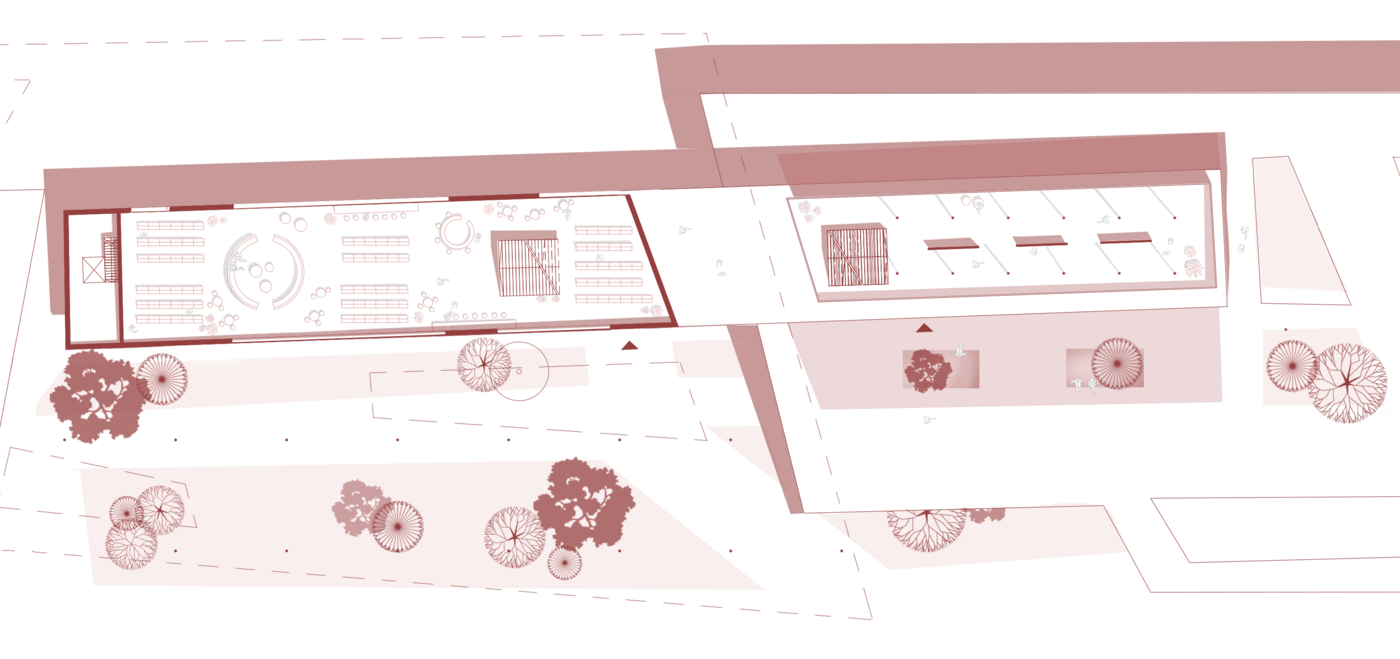
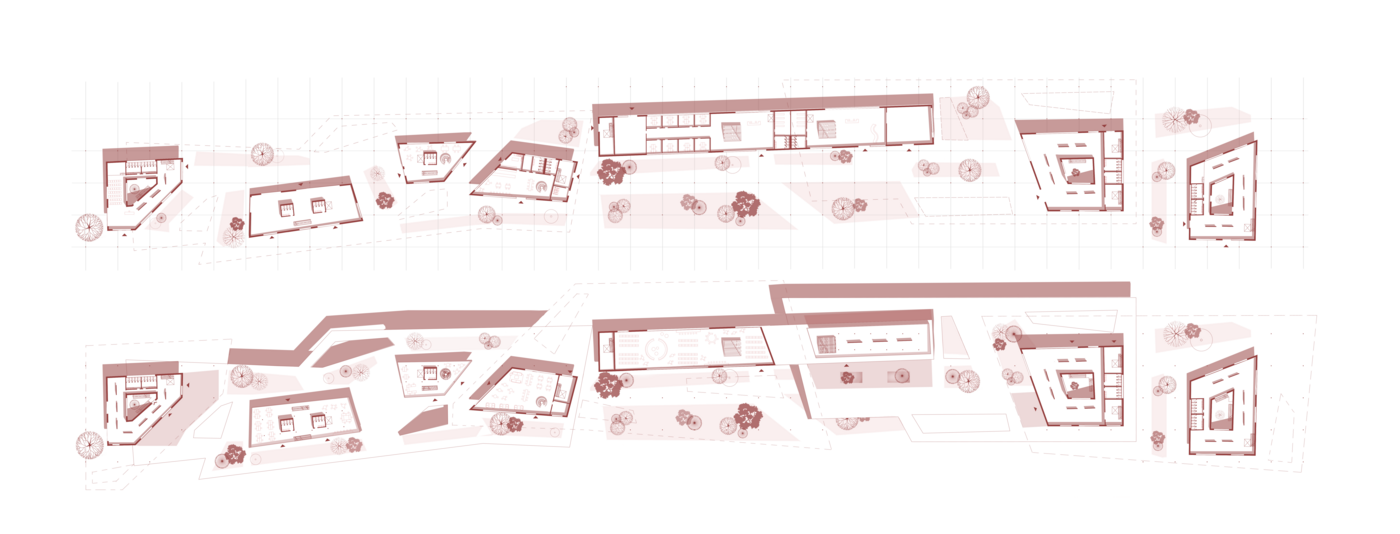
UTILAZIATION | usage distribution
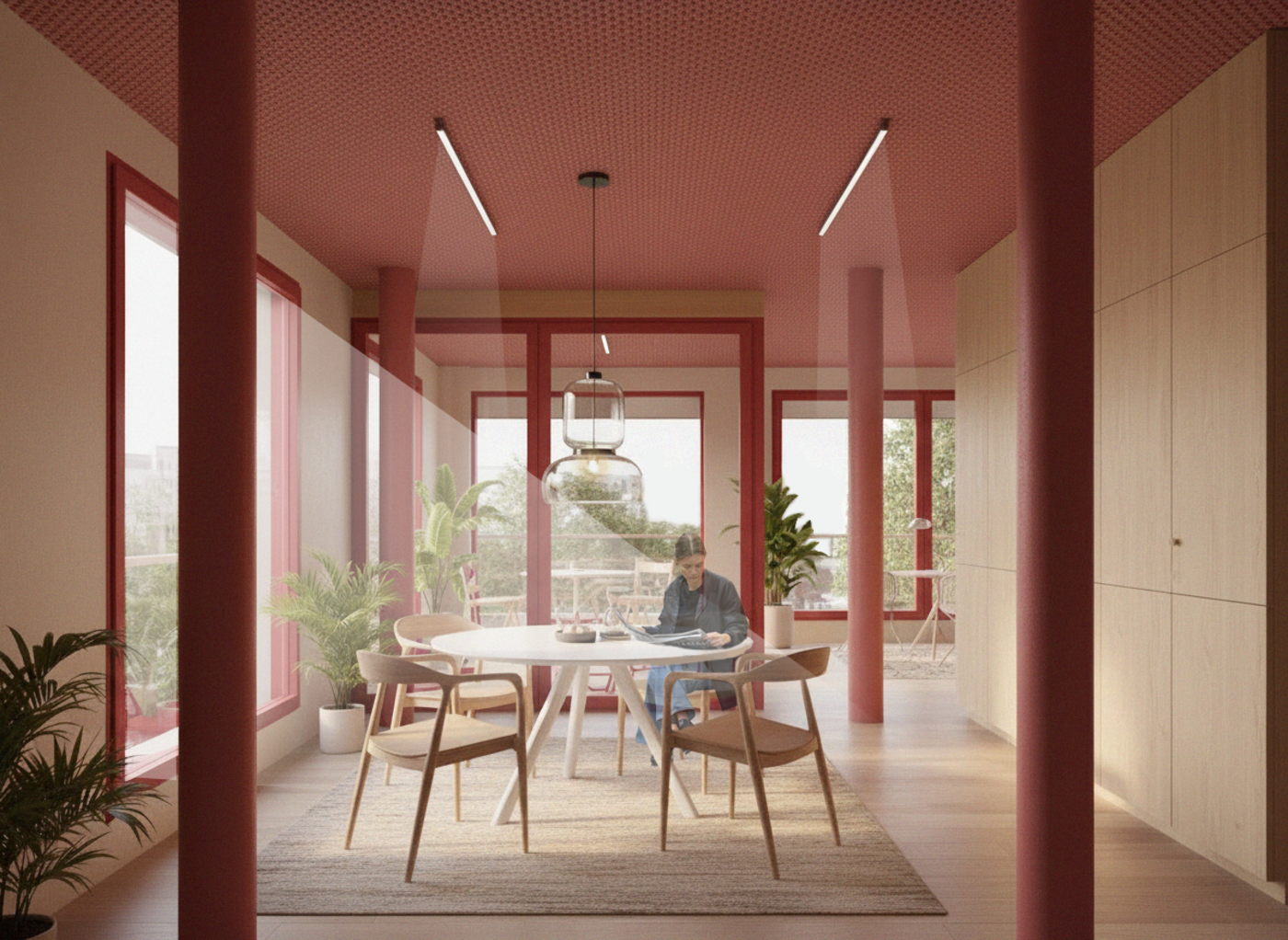
The area hosts a diverse mix of cultural and everyday uses. Libraries, studios, and workspaces support learning and production, while cafés and shared spaces activate daily social life. Museums and exhibition areas provide platforms for cultural exchange, complemented by flexible event spaces for concerts and gatherings. Housing is integrated above and around these public programs, creating a layered urban environment where living, working, and culture coexist.
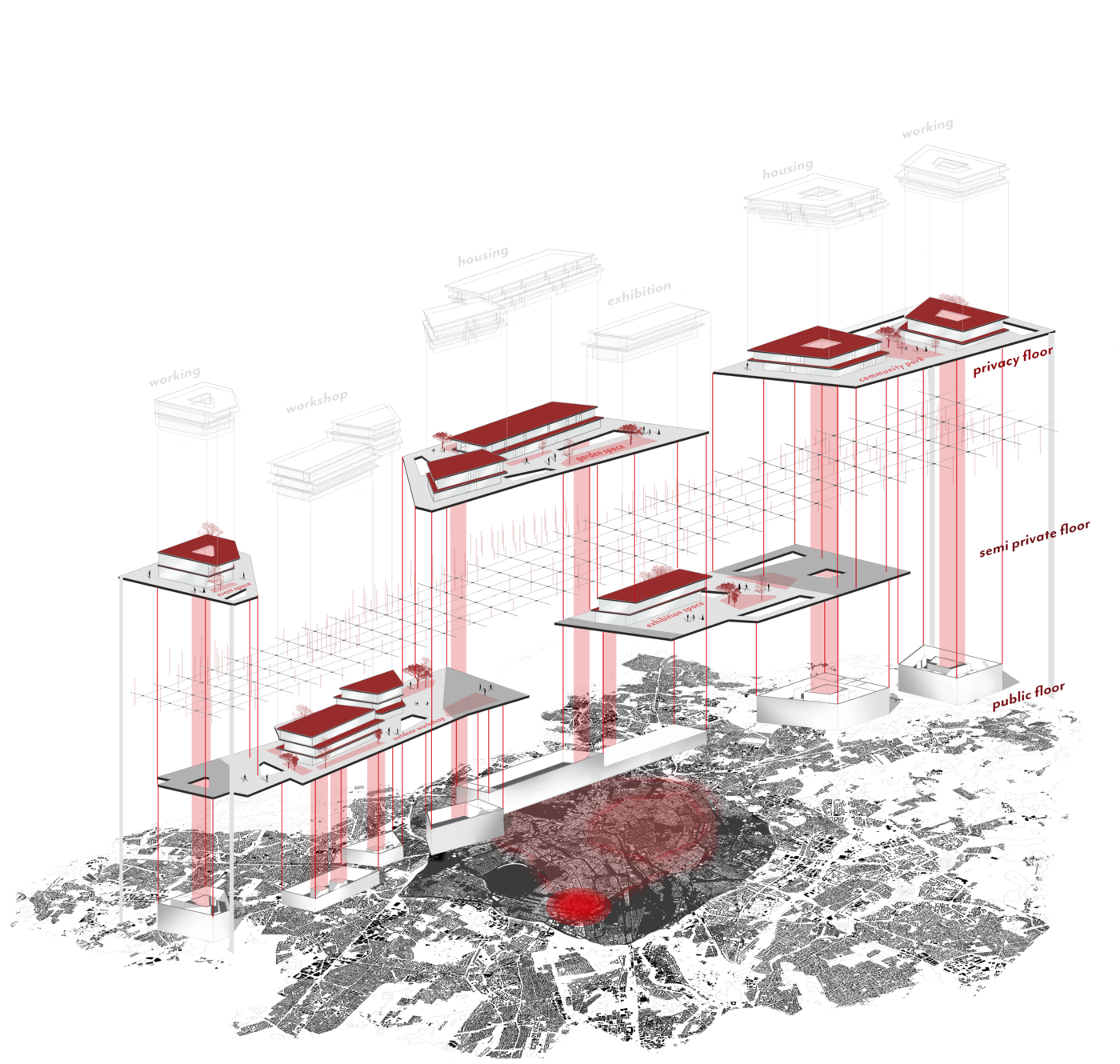
PRIVACY | exploded view
The plates are organized by a clear gradient of privacy. The ground floor remains highly public and accessible, accommodating cultural, productive, and social uses. With increasing height, the plates become progressively more private, hosting semi-private and residential programs. Each function is positioned according to this vertical hierarchy.
CYCLE | material cycle
The structure is built from lightweight perforated steel plates and slender steel columns, allowing for large spans and flexible extensions. Reused and recycled materials form the primary load-bearing system. Transparent glass volumes define enclosed spaces, while integrated planting beds and soil layers support vegetation and biodiversity. All materials are chosen for durability, adaptability, and circular reuse over multiple life cycles.
FUTURE | future area
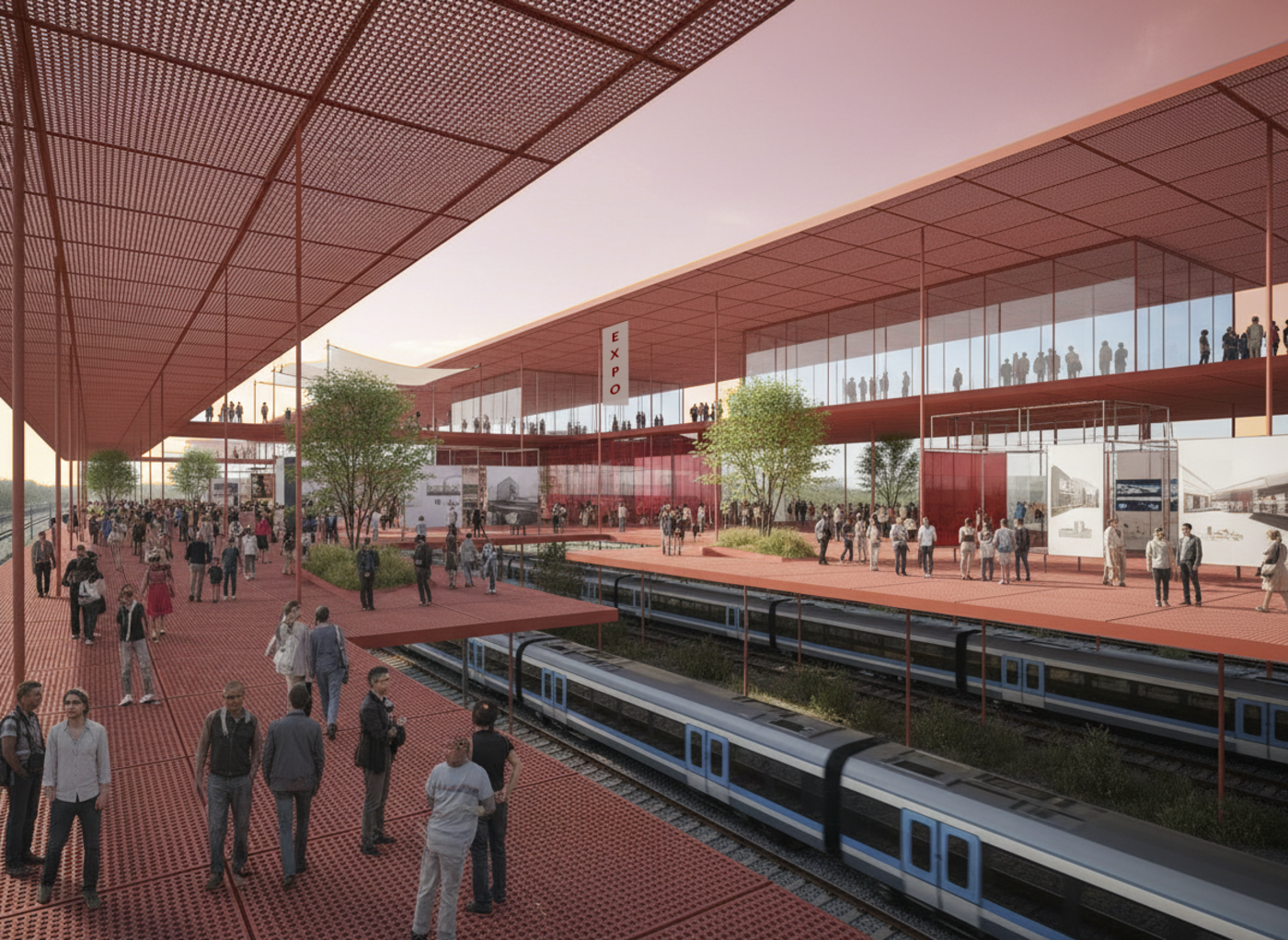
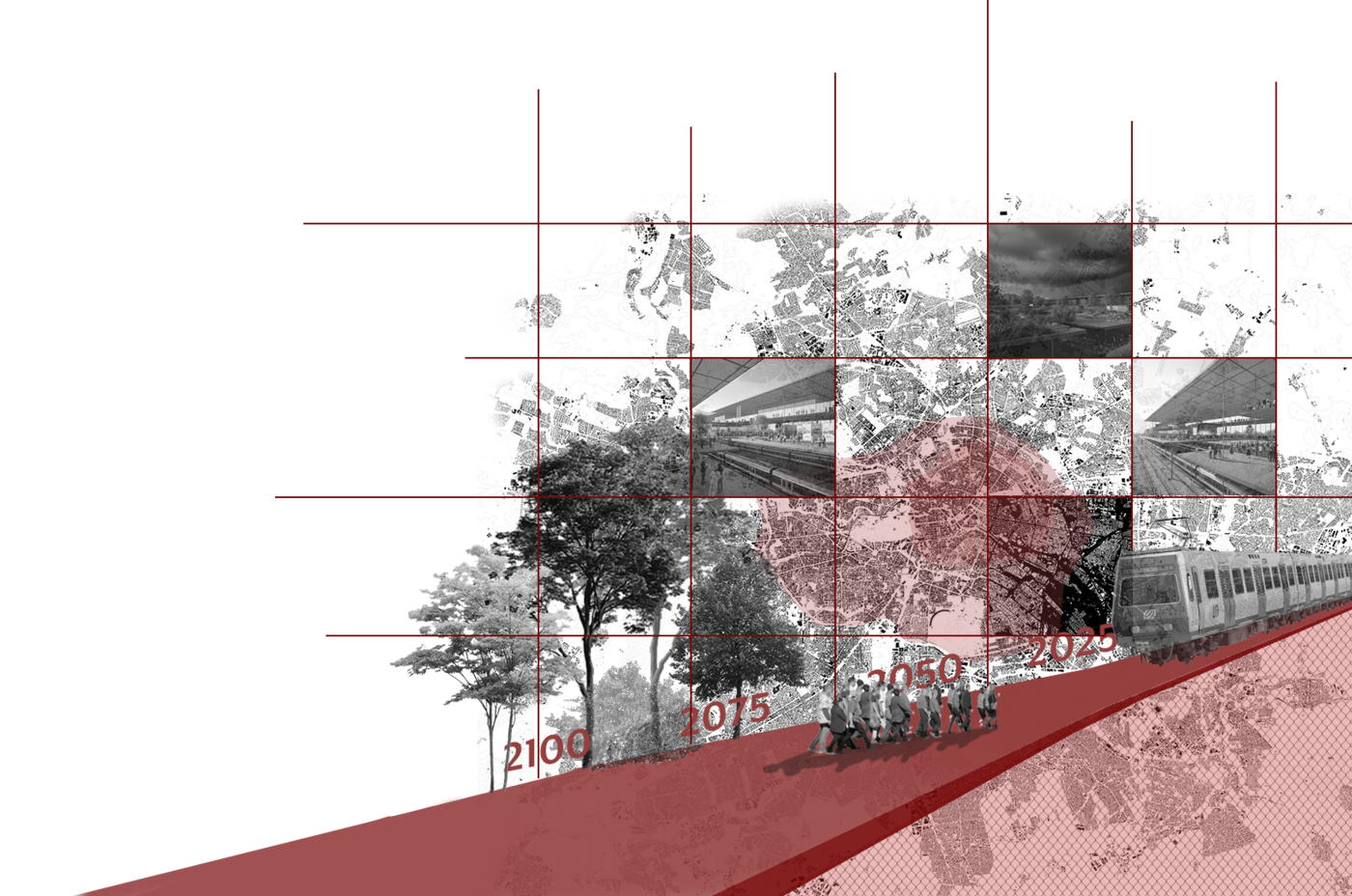
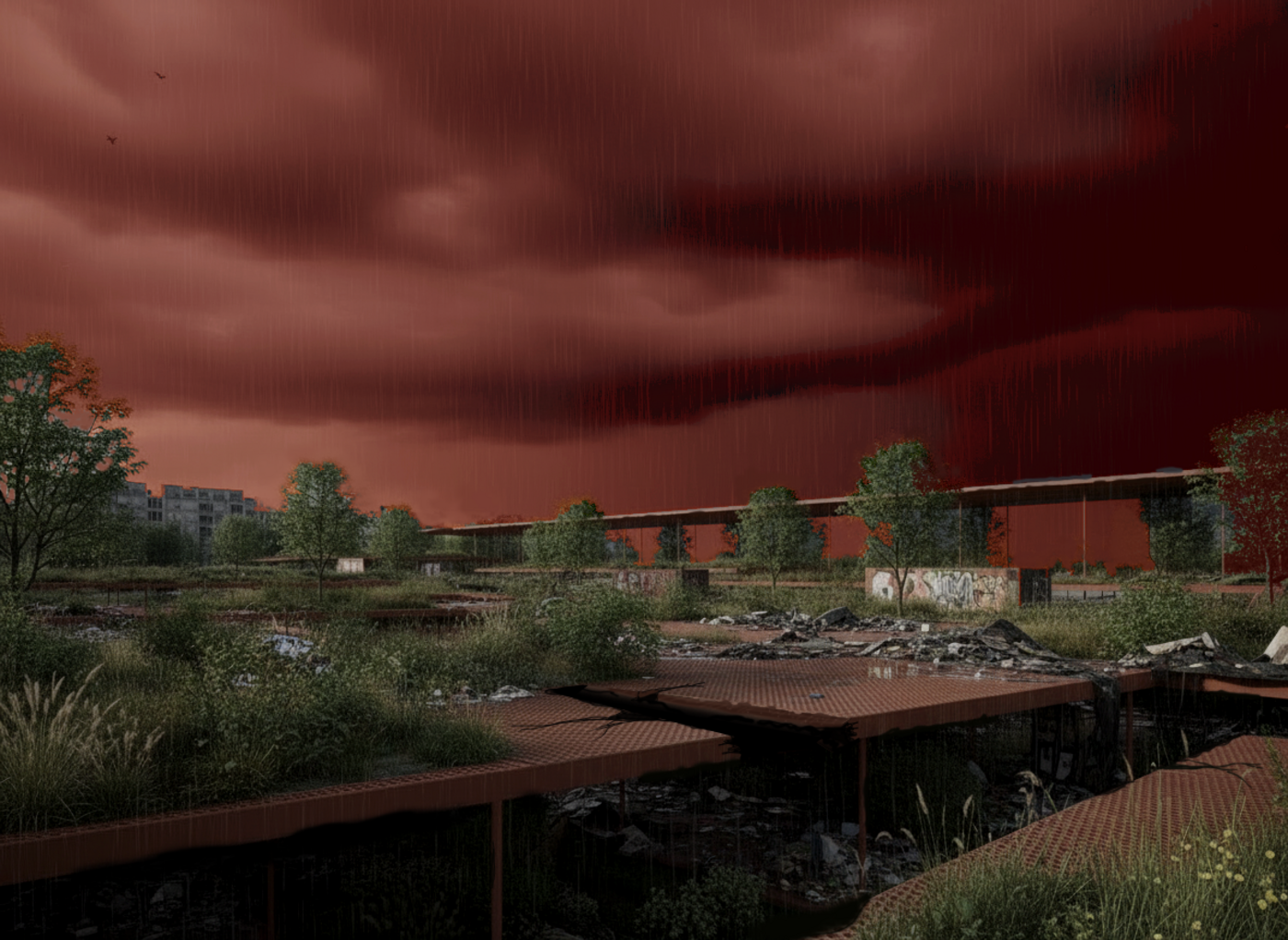
The project transforms underused railway infrastructure into a layered public landscape. Perforated steel platforms extend across and alongside the tracks, creating new ground levels for collective use and ecological growth. By 2050, the extended plates function as open-air spaces for concerts, exhibitions, and public gatherings, establishing a new cultural layer above the infrastructure. By 2075, the platforms gradually shift into a continuous biodiversity landscape. Human use retreats, allowing vegetation, water retention, and habitats to dominate. The plates keep expanding over time, forming an adaptive system in which architecture slowly dissolves into nature, enabling the city to breathe and regenerate.
CONNECTION | expanding plates
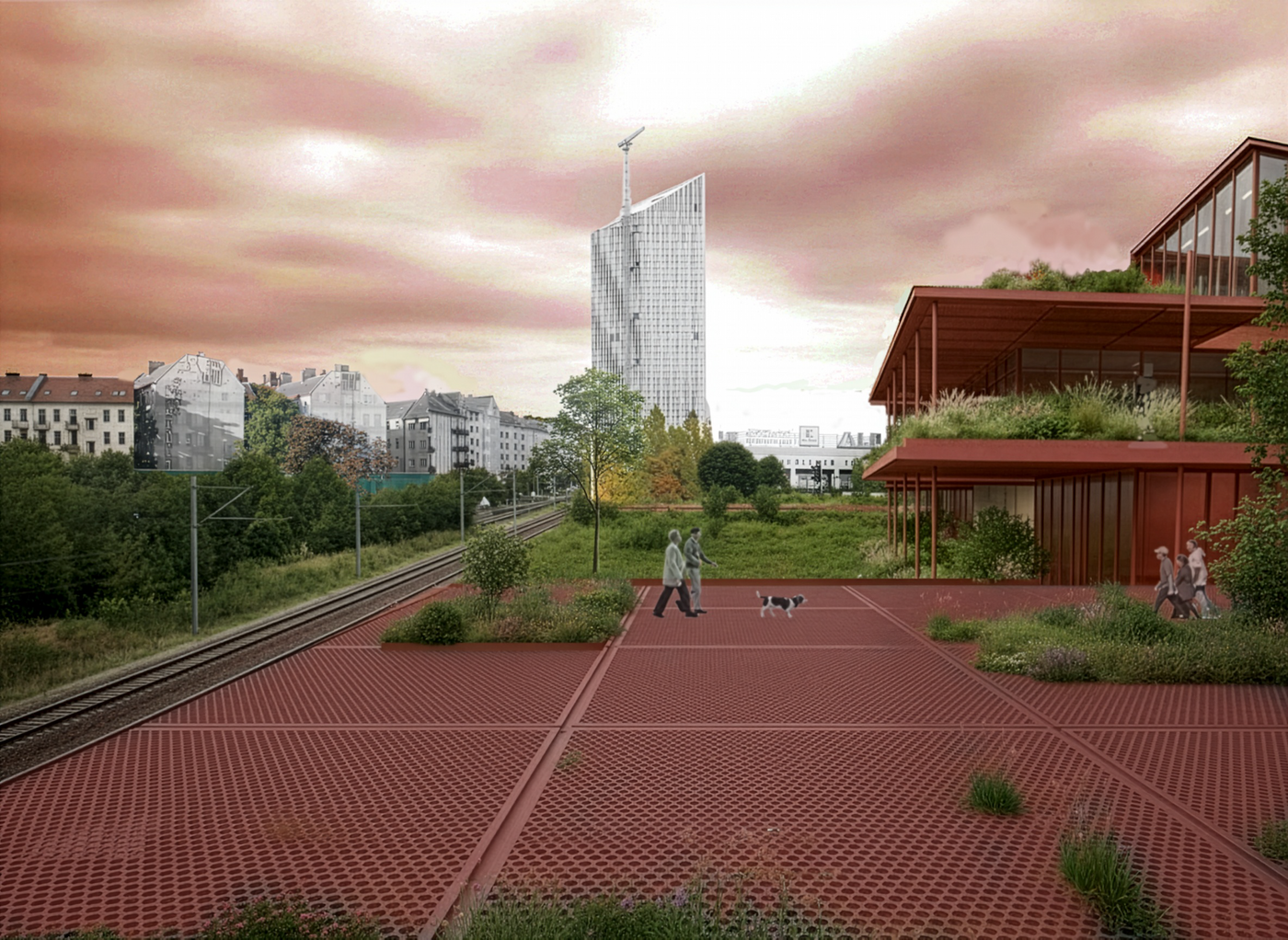
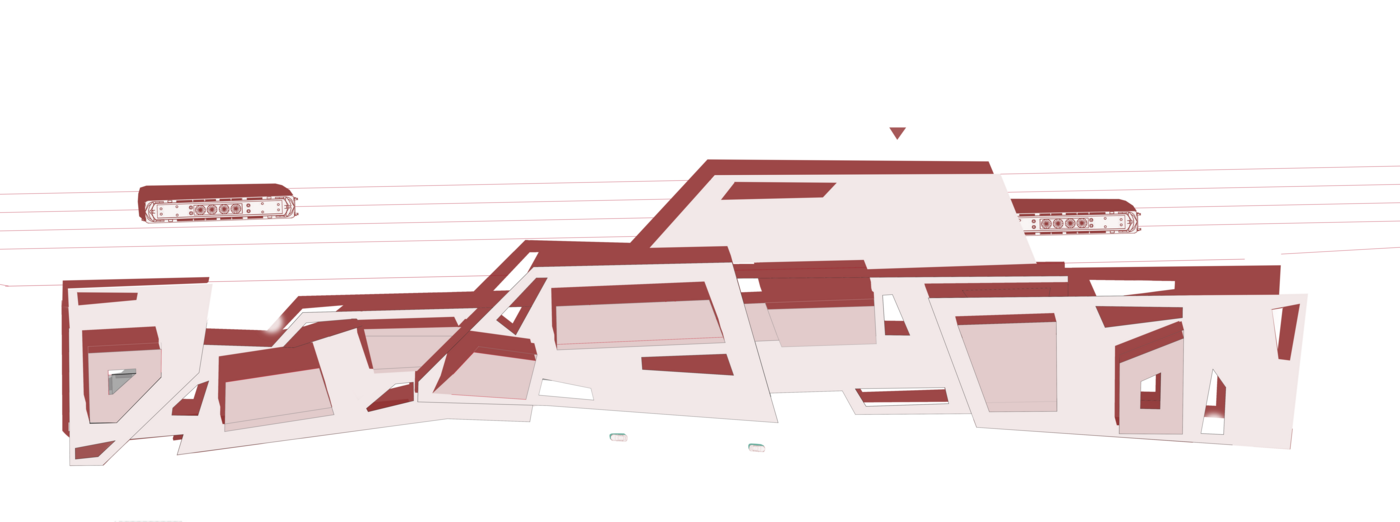
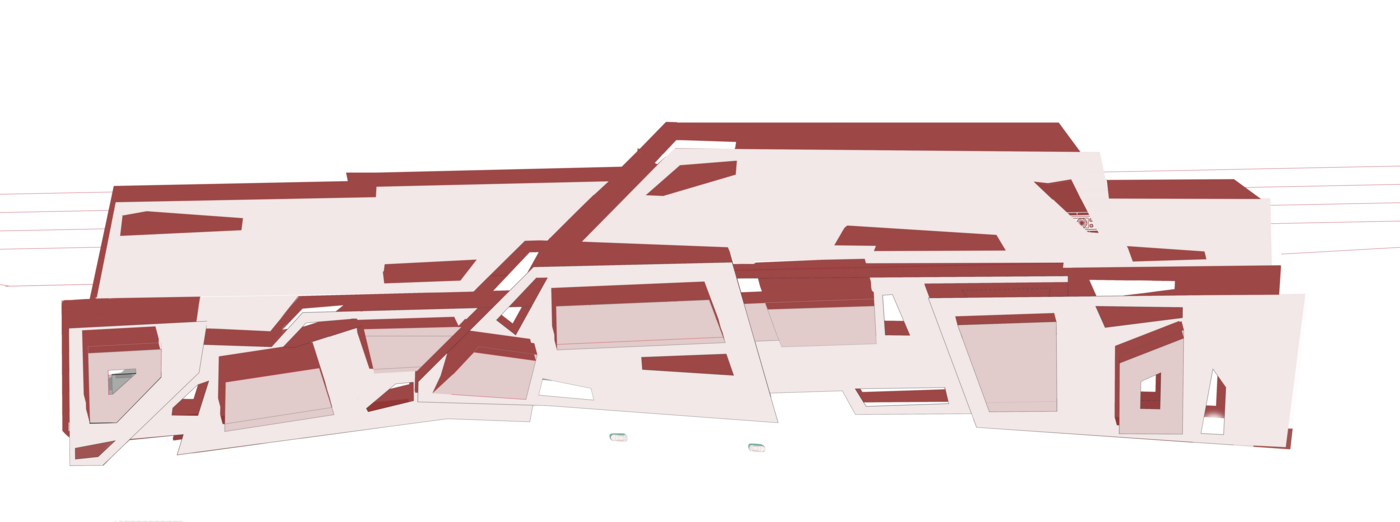
Over time, the plates expand and grow across the railway infrastructure, gradually bridging Berlin’s inner and outer city. What begins as a local intervention evolves into a continuous urban landscape, where new public programs, green infrastructures, and productive spaces extend beyond the tracks. The plates act as adaptable connectors, transforming barriers into shared ground and stitching together previously separated parts of the city